
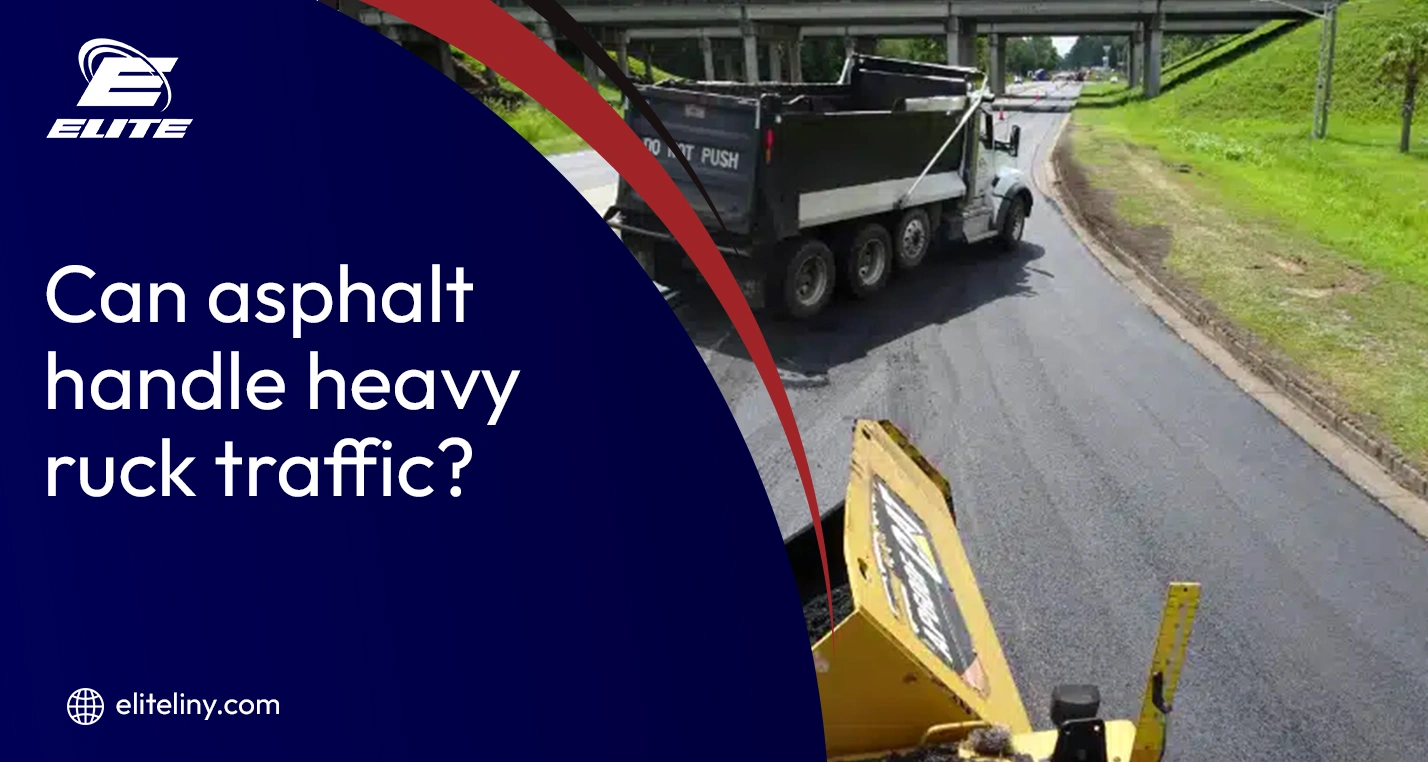
Heavy trucks place serious stress on asphalt surfaces every single day. Many property owners worry about cracking, rutting and surface failure under constant loads. The confusion usually starts with one key concern. Is asphalt really strong enough for heavy truck traffic?
| Core Takeaways
Yes. Asphalt can support heavy truck use when it is built correctly. The answer depends on base preparation, pavement thickness, mix quality, drainage and compaction. A surface designed for cars alone will fail under repeated freight loads. A pavement engineered for trucks performs much better over time. That is why heavy truck asphalt strength depends on the structure beneath the surface, not just the top layer. |
Is Asphalt Strong Enough for Heavy Truck Traffic?
Yes, asphalt can be strong enough for heavy truck traffic. The key is proper design and solid construction from the start. Heavy loads need more than a smooth black surface. They require depth, support and good drainage underneath.
Many asphalt failures happen because the pavement was underbuilt. The top layer may look fine at first. Still, trucks expose weak spots much faster than passenger cars. That is why truck areas need a stronger pavement system.
A properly built asphalt surface can perform very well for trucks. It can handle deliveries, freight movement and service traffic well. The pavement must match the real load conditions on site. Good planning makes all the difference.
What Makes Asphalt Strong Enough for Trucks?
Asphalt strength comes from several layers working together. The surface alone cannot carry repeated truck loads. The subgrade, base, mix, thickness and compaction all matter. When one part is weak, the whole pavement becomes more vulnerable.
Proper Subgrade Preparation
The subgrade is the soil beneath the pavement system. If that soil is weak, the surface above will struggle. Heavy trucks push loads deep into the ground. That means the soil must be stable and well prepared.
Soft or wet soil often causes early failure. It can shift under pressure and create cracks above. Good grading and compaction help strengthen the starting layer. Strong asphalt always begins below the surface.
Strong Aggregate Base Layers
The aggregate base sits above the soil and below the asphalt. Its job is to spread the truck’s weight across a wider area. A strong base reduces pressure on the upper surface. That helps prevent rutting and deep structural stress.
Poor base layers create trouble even under thick asphalt. The surface may crack because the support below is missing. A compacted stone base improves both strength and drainage. This layer carries much of the real load.
Correct Asphalt Thickness
Thickness matters a lot when trucks use the pavement often. Thin asphalt bends too much under heavy axle pressure. That repeated flexing leads to cracks and depressions. More depth gives the pavement better load resistance.
The right thickness depends on traffic type and frequency. Light deliveries need less support than freight terminals. That is why truck routes need a different design approach. Guessing thickness often leads to failure later.
High-Quality Asphalt Mix Design
Not all asphalt mixes perform the same way under load. Some mixes are stronger and more stable than others. Aggregate size, binder quality and mix balance all matter. A poor mix can fail even with good thickness.
Truck traffic demands a durable and properly designed mix. The surface must resist wear, pressure and temperature changes. Good materials help the pavement hold its shape better over time. Mix quality is a major part of long-term performance.
Proper Compaction Techniques
Compaction densifies and strengthens asphalt after placement. It removes excess air voids and helps the mix lock together. Poor compaction leaves weak spots inside the pavement. Heavy trucks find those weak spots quickly.
Timing also matters during compaction. Asphalt must be rolled at the right temperature range. If crews compact too late, density suffers. Good compaction helps the surface resist both rutting and cracking.
Asphalt Thickness Guidelines for Heavy Truck Areas
Different truck-use areas need different pavement depths. A driveway with rare deliveries is not the same as a freight lane. Load level and traffic frequency both change the design. Thickness should always match the expected use.
Residential Driveways With Occasional Trucks
Some residential driveways see delivery or moving trucks now and then. That traffic is heavier than regular car use. A standard light-duty design may not hold up well. Slightly stronger construction helps avoid edge cracking and sinking.
The truck path matters just as much as the number of visits. One repeated route can create concentrated stress. Areas near garage entries often take the most load. Even occasional truck use should be planned carefully.
Commercial Parking Lots
Commercial lots often handle service vehicles and delivery trucks daily. These areas need more support than residential asphalt. The traffic pattern is also less predictable across the site. That makes thickness planning more important.
Entry lanes and loading zones often need added attention. Trucks brake, turn and idle more in these spots. That creates extra stress on the pavement surface. Stronger design helps these areas last longer.
Industrial Facilities and Freight Areas
Industrial sites face much heavier truck traffic every day. Some areas carry loaded trailers and repeated freight movement. These loads are far beyond standard parking lot conditions. Asphalt in these spaces needs serious structural support.
Base thickness usually increases in industrial applications. Asphalt layers also need greater total depth and strength. Strong design helps reduce deformation under constant heavy use. Freight areas cannot rely on light-duty paving methods.
Loading Docks and Dumpster Zones
Loading docks and dumpster pads take some of the hardest abuse. Trucks stop, turn and carry concentrated loads there. These movements create pressure that damages weak asphalt quickly. Surface failure often starts in these exact zones.
Extra thickness helps but the design must go deeper than that. The base below must also resist repeated stress well. Reinforced pavement sections are often needed in these areas. High-pressure zones should never be built like standard parking spaces.
Factors That Affect Asphalt Performance Under Trucks
Good construction is only part of the equation. Outside conditions also change how asphalt performs under trucks. Traffic patterns, weather, water and soil all affect durability. Even strong pavement can fail faster under poor site conditions.
Truck Weight and Frequency
Heavier trucks place more stress on the pavement with each pass. Frequent traffic multiplies that stress over time. A few light deliveries are very different from daily freight use. Load planning should always match the expected traffic reality.
Axle pressure is especially important in pavement wear. One heavy axle can do more damage than several lighter vehicles. That is why repeated truck traffic needs better structural design. Frequency matters just as much as size.
Turning and Braking Areas
Trucks create extra stress when they turn or brake hard. The pavement faces scrubbing pressure in those locations. That force can twist the surface and create rutting. Flat straight lanes usually wear more slowly.
Intersections, loading areas and entrances need stronger support. These are the spots where trucks change direction the most. Added reinforcement often helps in these problem zones. Design should reflect actual movement patterns.
Water Drainage
Water is one of asphalt’s biggest long-term enemies. If it stays on the surface, damage develops faster. If it reaches the base, structural failure becomes more likely. Truck traffic worsens that weakness over time.
Good drainage helps protect every part of the pavement system. Slopes, grading and runoff control all matter here. A dry base stays stronger under repeated load. Drainage is not optional in truck areas.
Soil Stability
Stable soil provides better support for the entire pavement system. Weak soil shifts more easily under heavy truck pressure. That movement often causes cracking and uneven settlement above. Surface problems often begin in poor ground conditions.
Soil testing helps contractors understand what support is needed. Some sites may need stabilization before paving begins. Building over unstable soil creates future repair problems. A strong truck route starts with stable ground.
Conclusion
Asphalt can handle truck traffic when the pavement is built for it. That means proper soil preparation, strong base layers, good drainage and enough asphalt thickness. A light-duty surface will struggle under freight loads and repeated heavy use.
A well-designed system will perform much better and last longer. Climate, turning zones, water and truck frequency also shape pavement life. That is why heavy truck asphalt strength is really about total pavement design, not surface appearance alone.
If your property handles deliveries, freight vehicles or loading activity, Elite Parking Area Maintenance can help build and maintain asphalt surfaces that stay durable under demanding truck traffic.
FAQs
Does truck traffic damage asphalt?
Yes. Truck traffic can damage asphalt when the pavement is too thin. Weak base layers and poor drainage also increase wear. Repeated heavy loads create cracks, rutting and surface breakdown faster. Proper design helps reduce that damage significantly.
Is concrete better than asphalt for trucks?
Concrete can perform well under very heavy truck loads. Still, asphalt also works well when designed correctly. Asphalt is often easier to repair and maintain over time. The better choice depends on site use, cost and design goals.
Why does asphalt crack under heavy loads?
Asphalt cracks when pavement stress exceeds structural strength. Thin asphalt, weak soil and poor compaction increase that risk. Water damage and temperature changes make the problem worse. Strong construction helps prevent those cracks from forming early.