
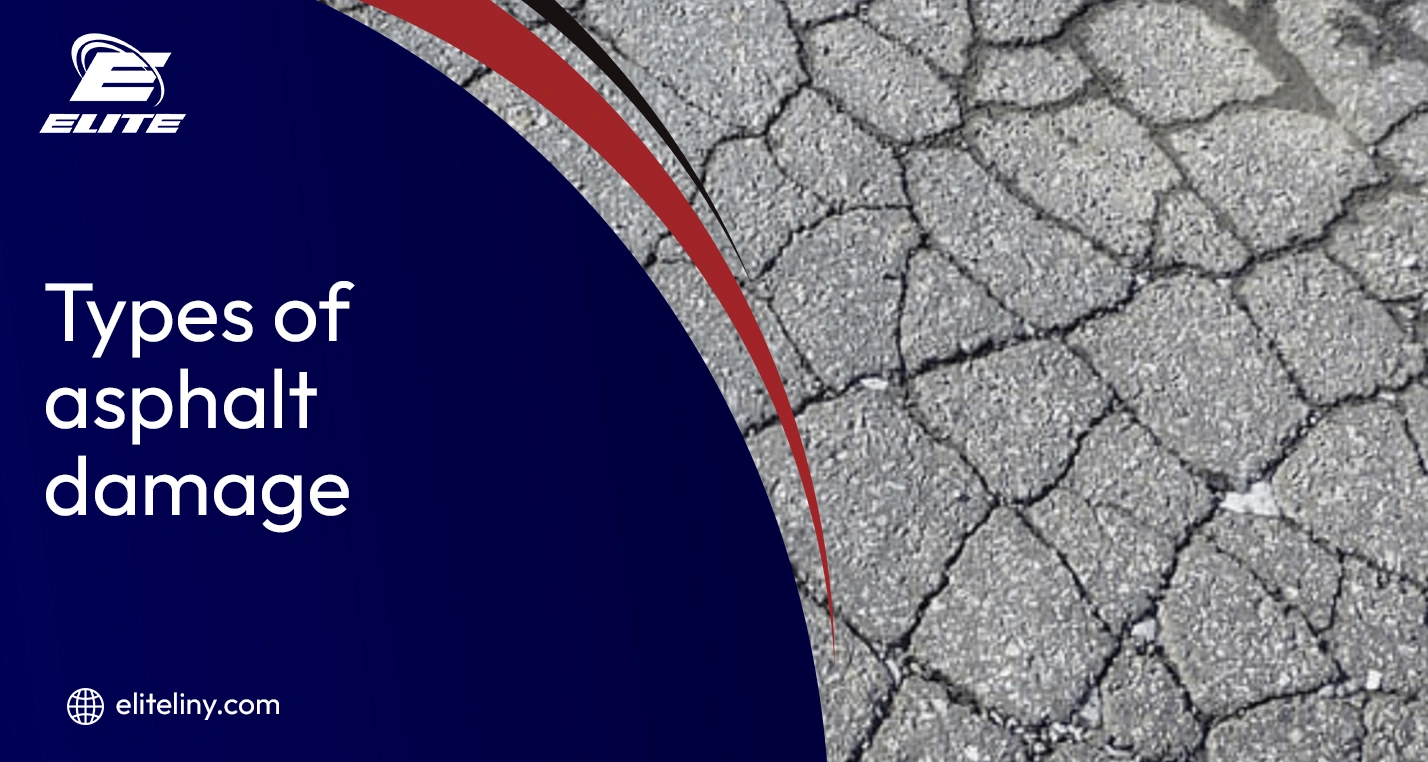
Asphalt pavement can develop several types of damage over time. This is due to traffic, weather, aging and poor drainage. The most common include cracking, potholes, rutting, raveling, edge deterioration, and depressions. Cracks may appear as alligator, transverse, longitudinal, or block cracking.
Key Takeaways
- Pavement failure typically starts as microscopic moisture cracks that quickly compromise the stone base beneath the surface.
- Heavy truck traffic, poor drainage layouts, intense sunlight, and freezing winter weather are the primary drivers of pavement erosion.
- For long-lasting protection and a flawless surface that keeps your property safe, investing in professional line striping and sealcoating is your best option.
- Addressing cracks and structural issues immediately saves thousands of dollars by extending your pavement’s lifespan.
9 Types of Asphalt Damage You Need to Know
Asphalt is technically a flexible pavement system. It is specifically engineered to bend and flex ever so slightly under the massive weight of rolling car tires. However, if the stone base softens from rain or the top protective oils dry out in the sun, that crucial flexibility disappears. Without it, the surface becomes brittle, cracking and crumbling under everyday traffic loads.
1. Alligator Cracking (Fatigue Cracking)
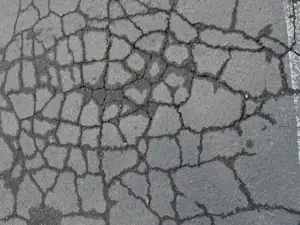
This stuff looks exactly like the scaly, rough hide of an alligator. It is a dense, ugly web of deep, interconnected fractures that spreads across your busiest driving lanes. When you see alligator cracking, it means your underlying gravel base layer has completely failed due to excessive vehicle weight or trapped water. Once this web locks into place, the pavement can no longer support vehicles. The only real fix is to completely cut out the section, dig down to rebuild the stone base, and dump in fresh hot-mix asphalt.
2. Edge Cracking
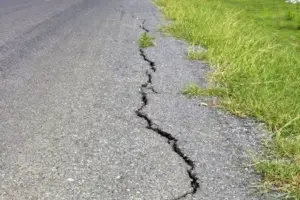
Edge cracks run perfectly parallel to the outer boundaries of your pavement layout. They almost always show up within a foot or two of the asphalt’s outer margin. This happens when the outer sides of your lot lack strong dirt or concrete shoulder support, or when heavy trucks drive way too close to the edge of the blacktop. Without adequate edge support to hold the asphalt in place, the edges simply yield, split, and break away under the pressure of turning tires.
3. Longitudinal Cracking
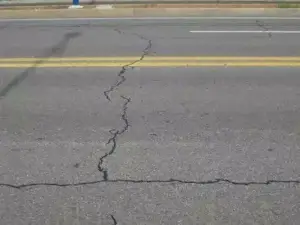
These are long, single fractures that run directly down the length of your pavement. They go in the exact same direction that cars travel. Usually, they form because of poor, weak seams between parallel paving lanes during the original installation, or because the blacktop contracts during freezing weather. If you do not seal these long lines fast with a rubberized filler, they will catch rainwater and eventually branch out into widespread alligator cracking.
4. Transverse Cracking
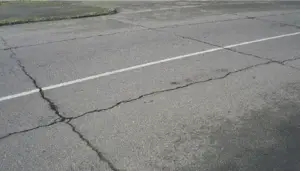
Transverse cracks run completely perpendicular to the flow of traffic, stretching horizontally from side to side across your driving lanes. They are caused by severe thermal stress. This happens when the asphalt pavement contracts sharply during freezing winter nights and then expands rapidly under the hot summer sun. Because these cracks run across the width of the driveway, they are highly susceptible to getting caught, chipped, and made worse by heavy commercial snowplow blades.
5. Potholes
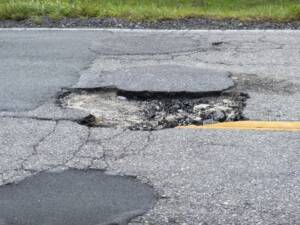
Potholes are deep, bowl-shaped holes with sharp, jagged edges that can potentially damage a car’s suspension or pop a tire. They can develop when alligator cracks are left completely ignored or when water infiltration and surface deterioration weaken the pavement structure. Rain seeps inside the open gaps, washes away the supporting stone base, and causes the top blacktop shell to cave right into the hollow void below. Passing tires constantly hit the sharp edges, breaking off chunks of loose rock and making the hole wider and deeper every single day.
6. Raveling
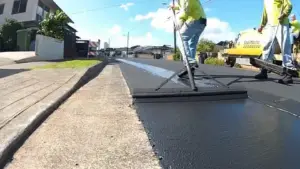
Raveling is when the top surface of your asphalt starts to progressively break apart from the upper layer down. You will notice the smooth, black surface aggregate wearing away, leaving behind a rough, stone-heavy, bumpy texture covered in loose, rolling gravel. This happens because the sun’s intense UV rays dry out the binding bitumen oils, causing the mix to lose its grip on the rocks. As the fine aggregate washes away, your pavement continuously thins out.
7. Rutting
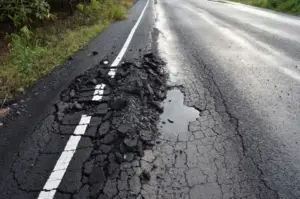
Rutting looks like deep, permanent tire tracks sunk right into the paths where cars consistently drive. It forms depressions along the exact paths where wheels roll day after day. This failure happens if the asphalt mix was not packed down enough with heavy rollers during installation, or if the underlying base is simply too soft to hold up heavy delivery trucks. These ruts are incredibly dangerous during rainstorms because they collect deep pools of water that cause vehicles to hydroplane.
8. Depressions (Bird Baths)
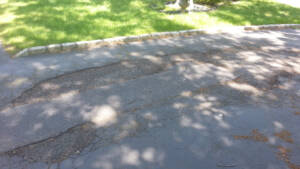
Depressions are localized low spots in the pavement surface that do not have sharp, broken edges like a standard pothole. Instead, they look like shallow dips that collect stagnant rainwater, creating annoying puddles that property managers call bird baths. They form when the dirt foundation shifts, settles unevenly, or washes away underneath the asphalt over time, and the standing water accelerates the failure of the surrounding pavement surface.
9. Upheaval
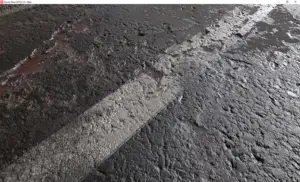
Upheaval is the exact opposite of a depression. It is a bumpy, localized upward bulge or swelling of the pavement structure. This upward movement is usually triggered by expansive clay soils swelling up below the base, aggressive tree roots growing directly under the blacktop, or intense winter frost heaving. These sudden, unexpected bumps create immediate trip hazards for walking customers and can easily scrape the undercarriage of low-riding cars.
Conclusion
Recognizing the different types of asphalt damage can help you take action before minor issues turn into major repairs. Surface problems include alligator cracking, longitudinal cracking, transverse cracking and edge cracking. These allow moisture to penetrate the pavement. On the other hand, there are potholes, depressions, and rutting. These compromise safety as well as driving comfort. Raveling gradually weakens the asphalt surface and upheaval creates hazardous bumps caused by movement beneath the pavement. Identifying these warning signs early and investing in prompt repairs. Preventive maintenance will extend your pavement’s lifespan and improve its appearance. This way, you also avoid costly reconstruction in the future.
Contact Elite Parking Area Maintenance today for a thorough inspection and reliable solutions.
FAQs
Can you apply a fresh layer of sealcoat directly over severe alligator cracking?
No, sealcoating is a preventative surface treatment. It cannot fix deep structural failures. Alligator cracking requires a professional. They will cut out the broken section, rebuild the gravel base as well as install fresh hot-mix asphalt.
Why does my asphalt look gray and dusty instead of a rich, deep black?
This color change is caused by oxidation from the sun’s intense UV rays. This dries out the essential binding oils. It leaves the pavement surface vulnerable to brittle cracking.
How soon should cracks be filled after they first appear on the parking lot?
You should aim to have cracks filled with a hot-pour rubberized sealant every fall. Before freezing temperatures and heavy snowplows expand the openings.