
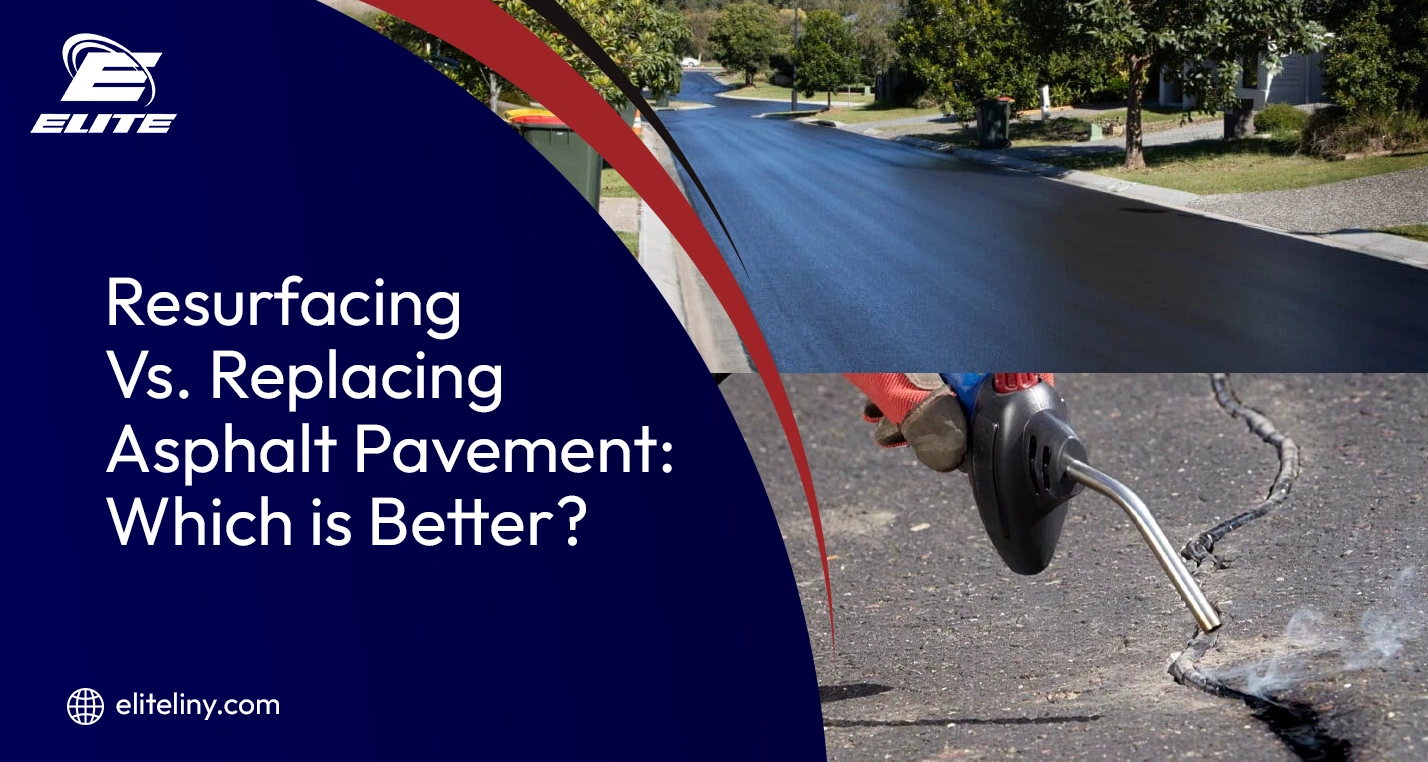
Resurfacing and replacing asphalt pavement sound like they’re on the same team, but they’re really solving two very different problems. Resurfacing is what you choose when the pavement is tired. Basically when the base is still solid and just needs a fresh layer to smooth out the years of sun, traffic, and small cracks.
Replacement is for when things have gone deeper, when the ground underneath has started to give up and no amount of covering will stop the cracks from coming back. One is a second chance; the other is a clean slate. So which is better between resurfacing and replacing asphalt paving? Resurfacing is better if you want a cost-effective refresh on pavement with a solid base. Replacement is better if you want a long-term fix for structural damage and drainage issues.
Let’s walk through each one in a way that actually makes sense.
Understanding Resurfacing
Resurfacing is basically giving your pavement a new top coat. Not a cosmetic sprinkle, but a real new layer of asphalt laid over the old one, usually around an inch and a half thick. It works only when the layers beneath are still strong.
Resurfacing makes sense when you see things like:
- Light cracking that hasn’t connected into big webs
- Small dips that don’t affect drainage
- Fading or roughness from sun exposure
- Slight surface erosion
- Normal wear from years of use
It’s a surface-level refresh. Think of it as covering the wrinkles without changing the bone structure.
Resurfacing is a smart option when:
- The driveway or lot is somewhere around 8 to 15 years old
- The base still feels firm beneath your feet or tires
- Water drains off instead of pooling
- The cracks are shallow and isolated
And it’s cheaper. Faster. Cleaner. When done at the right moment, resurfacing can easily stretch pavement life by another decade or more. But it only works when the foundation is behaving. If the base has issues, resurfacing just buys a few quiet months before the same problems push through again.
Understanding Replacement
Replacement is the big reset. The old asphalt gets removed entirely. The base gets fixed, leveled, and compacted. Sometimes completely rebuilt if it has softened or shifted. Then a new asphalt structure goes on top.
Replacement is needed when:
- Cracks form patterns that look like alligator skin
- Potholes keep reappearing
- Parts of the driveway sink
- Water sits longer than it should
- The asphalt feels soft or spongy
- The pavement is 20 years old or more
Here’s the truth. When the structure underneath is failing, resurfacing won’t stand a chance. Replacement is how you fix drainage problems, slope issues, root damage, erosion under the asphalt, or a base that has simply aged out.
Replacing asphalt pays off because:
- You get a fully rebuilt structure
- Drainage and slope get corrected
- The pavement lasts decades
- It reduces ongoing repair costs
Yes, it costs more. Yes, it takes longer. But skipping replacement when it’s needed just wastes money on temporary fixes that can’t hold.
Comparison Table for Resurfacing and Replacing Asphalt Pavement: Which Is Better?
| Feature | Resurfacing | Replacement |
| What It Fixes | Surface wear and shallow cracks | Structural damage and deep failure |
| Cost | Lower | Higher |
| Lifespan Added | Around 8 to 15 years | Around 20 to 30 years |
| Base Repairs | No | Yes |
| Best For | Pavement with a healthy foundation | Pavement with sinking, alligator cracks, water issues |
| Drainage Correction | No | Yes |
| Time Needed | Short | Longer |
| Appearance | Much improved | Completely new pavement |
Resurfacing vs. Replacing Asphalt Pavement: Which Is Better?
Here’s where people like a straight answer, but it really depends on what is happening under the surface. If the pavement still has a strong base, resurfacing is almost always the better deal. It’s cost effective, it gives you a smooth fresh finish, and it extends the pavement’s life without tearing everything apart.
But when the driving surface is breaking down from underneath, replacement is the only choice that makes sense long-term. Resurfacing cannot fix a weak or damaged base. The cracks will return. The dips will widen. The water will keep pooling. Replacement removes the old problems and rebuilds the structure so the pavement lasts another twenty-plus years.
So which is better between resurfacing and replacing asphalt pavement? The one that matches the real condition of the pavement. Not the visible cracks, but the foundation under them.
Conclusion
When people compare resurfacing and replacing asphalt pavement, the difference comes down to what your pavement is actually trying to tell you. Resurfacing gives you a new surface when the structure underneath is still holding strong. Replacement resets everything when the base isn’t reliable anymore. Resurfacing can add eight to fifteen years of solid use. A replacement can deliver twenty to thirty. If the base drains well, feels stable, and the cracks are shallow, resurfacing is probably enough. If the pavement is sinking, cracking in big patterns, or holding water, replacement will protect the property far longer. A quick professional evaluation with Elite Parking Area Maintenance can show you exactly which path fits your pavement and your budget before you commit to either one.