
Sidewalks guide pedestrians safely between homes, offices, and stores every day. Wheelchair users need smooth, firm paths that avoid sudden drops and narrow gaps. Blocked pathways prompt lawsuits against cities that serve disabled residents poorly. Accessible sidewalks create inclusive communities where everyone walks equally well.
Property owners often wonder what the ADA sidewalk requirements are. A minimum width of 48 inches ensures smooth wheelchair passage everywhere. Cross-slope limits prevent dangerous sideways drift on every path. Curb ramps connect streets to sidewalks seamlessly. Detectable warnings guide blind pedestrians safely. Owners avoid violations by perfectly following these clear standards.
10 Key ADA Sidewalk Requirements You Should Know
ADA sidewalk standards create safe paths for wheelchair users and blind pedestrians. These ten standards ensure smooth, accessible routes everywhere. Property owners avoid lawsuits by maintaining proper pathways at all times.
1. Minimum Sidewalk Width
Sidewalks need a minimum width of 48 inches for wheelchair passage. Narrow paths dangerously force users into the streets. 36-inch sections work short distances with passing spaces nearby. Utility covers stay centered, keeping the full width open. Cities prefer 60-inch sidewalks serving two wheelchairs passing comfortably.
Existing narrow paths need adjacent ramps to create accessible routes. Clear width runs continuously, avoiding pinched sections everywhere. Contractors measure edge-to-edge to ensure full compliance.
2. Passing Space Requirements
Wheelchair users meet oncoming pedestrians at rest areas. Passing spaces measure a minimum of 60×60 inches every 200 feet. T-shaped areas work too with 48-inch arms extending outward. Street corners count, serving dual purposes naturally. Narrow sidewalks under 60 inches require frequent passing zones.
Driveways often create natural passing spaces automatically. Wheelchair turning needs 90-degree spaces measuring 60 inches wide. Property owners plan passing areas during initial sidewalk design phases.
3. Cross Slope Limits
Cross slopes run sideways, tilting wheelchairs dangerously off paths. Maximum 1:48 ratio keeps surfaces stable underfoot. Preferred 1:50 slope drains water without excessive tilt. Measure perpendicular from edge to edge always. Brick pavers create uneven cross-slopes that catch tires.
Tree lawns separate sidewalks and maintain proper drainage slopes. Contractors use laser levels to precisely check cross slopes. Water pools damage surfaces, creating hazards over time.
4. Running Slope (Longitudinal Slope)
Running slopes face forward, controlling wheelchair momentum. A maximum 1:20 slope avoids ramp classification requirements. 1:12 slopes work short segments under 30 feet only. Longer, steeper sections need curb ramps to properly break grades. Measure all path segments to ensure no excessive inclines.
Hillside sidewalks use switchbacks to maintain gentler slopes consistently. Contractors carefully classify paths versus ramps during planning stages. Steep grades exhaust users and require frequent rest areas.
5. Surface Requirements
Wheelchair tires catch rough, broken surfaces, stopping progress completely. Firm, stable surfaces withstand weather and foot traffic year-round. Concrete and asphalt provide the smoothest ADA-compliant walking paths. ½-inch maximum gaps prevent tire-catching hazards everywhere.
Tree roots lift slabs, suddenly creating dangerous vertical changes. Expansion joints stay flush, consistently avoiding lip hazards. Contractors pour a minimum of 4 inches to resist cracking over decades. Slip-resistant finishes prevent falls in wet weather.
6. Curb Ramps and Transitions
Curb ramps create smooth street-to-sidewalk connections at crossings. 48-inch-wide ramps center precisely at pedestrian paths. Flared sides, with a maximum 8.3%, guide users onto streets safely. Counter slopes with a maximum 1:20 prevent wheelchair tip-back accidents.
Level landing areas provide flat resting spots before crossings. Contractors install ramps that perfectly match existing sidewalk elevations. Multiple ramps serve wide intersections, always providing options. Smooth transitions eliminate sudden drops that catch pedestrians off guard.
7. Detectable Warning Surfaces
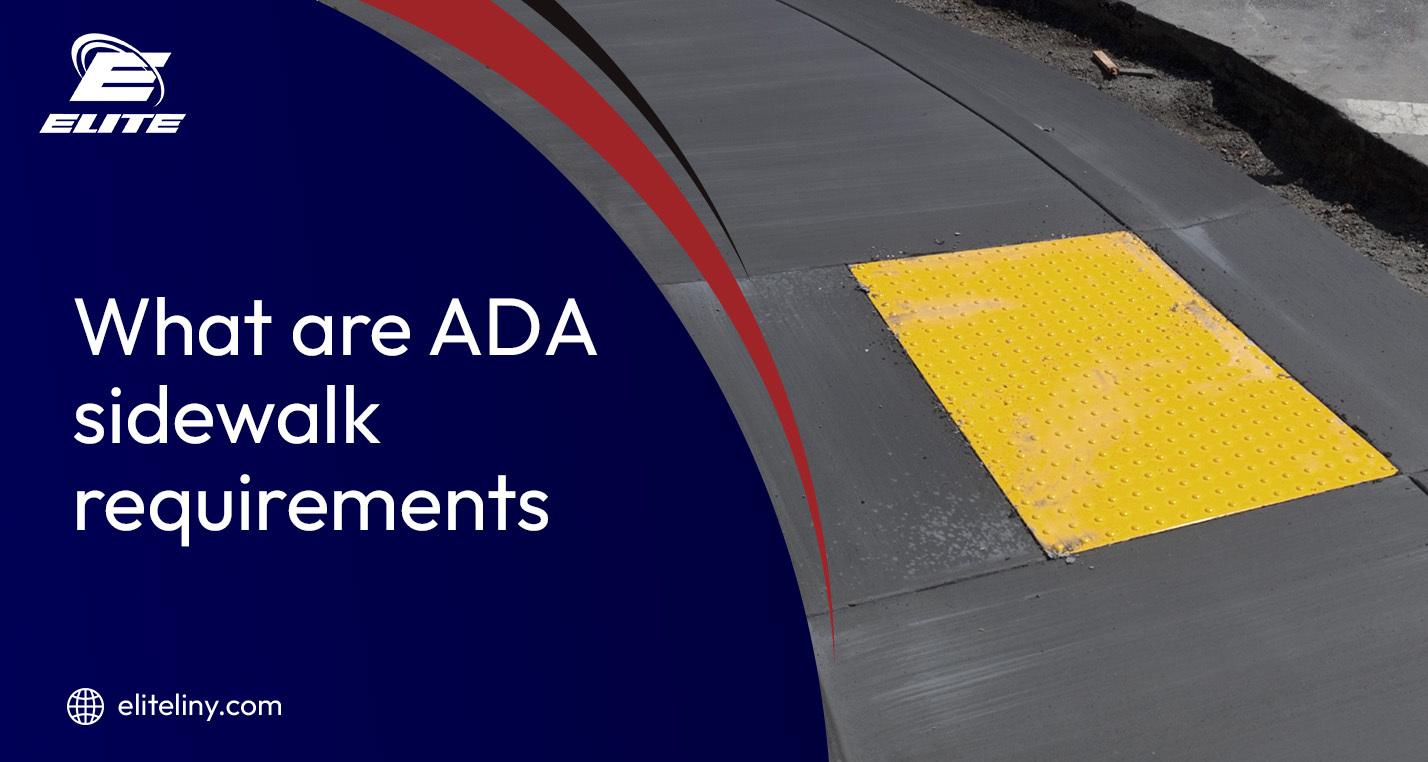
Blind pedestrians feel truncated domes signaling the dangers of street crossings ahead. The 24-inch minimum depth extends completely from the curb edge. The yellow color contrast alerts vision-impaired users immediately upon approach. Domed pattern spacing follows exact ADA specifications precisely. Consistent placement builds muscle memory for frequent neighborhood walkers.
Contractors install warning signs that harmonize with the surrounding sidewalk colors. Tactile surfaces withstand vehicle tires and weather exposure year-round. Maintenance crews clean up debris, keeping warnings functional at all times.
8. Obstruction-Free Path
Poles, signs, and trees block wheelchair progress unexpectedly mid-journey. A 36-inch clear zone runs the length of the sidewalk continuously without interruption. Utility poles are located at least 12 inches outside the walkway boundaries. Street signs project no closer than 48 inches horizontally overhead. Mailbox clusters gather completely beyond pathway edges.
Parked bicycles are always secured away from pedestrian clear zones. Contractors proactively design sidewalks to avoid future obstruction problems. Property owners trim vegetation to maintain open paths year-round.
9. Vertical Clearance Requirements
Overhead branches pose a threat to tall pedestrians carrying packages or strollers. An 80-inch minimum height protects everyone walking upright comfortably. Tree branches are trimmed consistently to maintain clearance year-round. Awnings extend no lower than 80 inches above walking surfaces. Streetlights are mounted high to avoid accidental head strikes.
Temporary decorations lift above the required clearance levels during holidays. Contractors carefully verify vertical clearance during final walk-through inspections. Wheelchair users pushing tall loads always need full overhead protection.
10. Accessible Pedestrian Signals (APS)
APS units deliver audio guidance to blind pedestrians, helping them navigate intersections safely. Locator tones help users find buttons quickly in noisy environments. Speech messages announce “Walk sign is on” clearly every cycle. Vibration feedback confirms button presses for deaf-blind pedestrians.
A 10-decibel minimum volume effectively carries across street traffic. Braille labels identify crossing directions precisely for everyone. Contractors install APS that perfectly match pedestrian signal timing. Rapid ticking signals pedestrian clearance phases confidently.
Conclusion
Understanding what ADA sidewalk requirements are helps create safe paths for wheelchair users and blind pedestrians everywhere. 48-inch minimum widths ensure continuous wheelchair passage through neighborhoods.
Cross-slope limits prevent dangerous sideways drift on every walkway. Curb ramps connect streets to sidewalks seamlessly, while detectable warnings guide vision-impaired walkers with confidence. Property owners avoid lawsuits by properly maintaining these ten essential standards.
Elite Parking Area Maintenance assesses ADA sidewalks, ensuring full compliance. Schedule your professional sidewalk inspection today to prevent violations and eliminate trip hazards.
Frequently Asked Questions
What is ADA concrete?
ADA concrete features smooth, firm surfaces without cracks or gaps. Wheelchair tires roll easily over expansion joints. Stable concrete slabs withstand year-round weather changes. Contractors always pour a minimum thickness of 4 inches.
What is the ADA clearance for a walkway?
ADA walkway clearance requires a minimum unobstructed width of 36 inches. 80-inch vertical clearance protects tall pedestrians everywhere. Passing spaces measure 60 x 60 inches, with a maximum of 200 feet. Clear zones stay open continuously.
What qualifies as a sidewalk?
Sidewalks connect building entrances to streets, primarily serving pedestrians. Public rights-of-way, including official ADA sidewalks, always serve public access and follow the same standards. Continuous, accessible routes completely define qualifying pathways.