
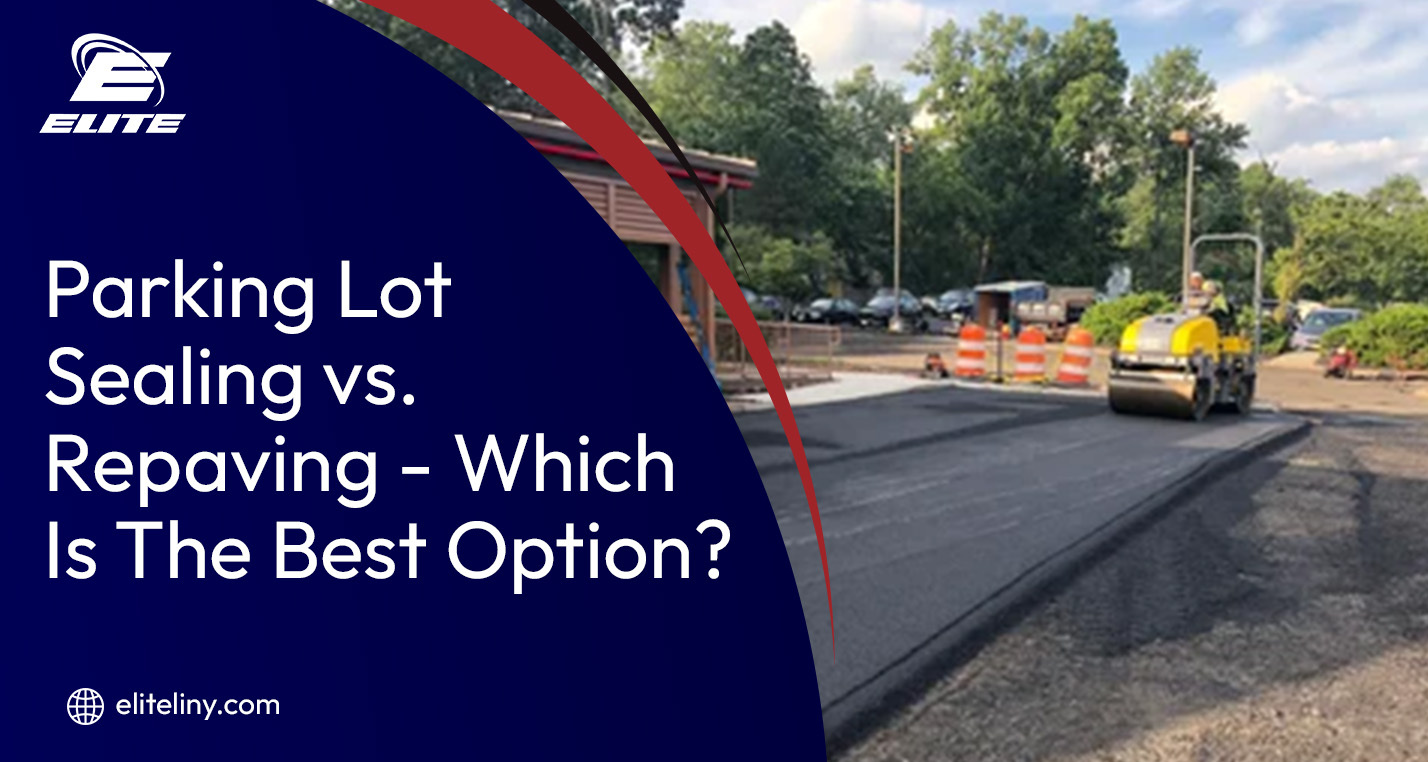
Your parking lot says a lot about your business. A smooth black surface looks professional. It makes customers feel safe. It shows you care about details. But parking lots do not stay perfect. Small cracks can turn into bigger problems if ignored. That is why property owners often ask a simple question. Should you use parking lot sealing or choose repaving? The best option depends on your pavement’s current age and condition. Sealcoating is a cost-effective prevention for surfaces, while repaving provides a necessary total restart for failing foundations. Damage severity, your available budget, and daily traffic loads also dictate the right choice. Ultimately, proactive sealing extends lifespan, but repaving ensures long-term reliability when recurring repairs fail.
What Is Parking Lot Sealing?
Parking lot sealing, also called sealcoating, is a process where a protective layer is applied over asphalt. It acts like sunscreen for your pavement. Workers spray a liquid sealant on the surface to block water and sun damage. This keeps the asphalt strong and dark. It does not fix deep holes or big cracks. You use it to protect the surface and make the lot look new.
Pros and Cons
| Pros | Cons |
| Low cost compared to repaving | Does not fix serious damage |
| Improves appearance quickly | Needs reapplication every few years |
| Protects from UV rays and water | Limited lifespan |
| Helps prevent small cracks | Not suitable for old pavement |
| Fast application time | Only surface-level solution |
What Is Parking Lot Repaving?
Repaving is a total restart for your parking lot. Workers sometimes remove damaged asphalt. They fix or replace the stone base underneath if needed. Then, they lay 2–4 inches of new asphalt over the prepared base layer. This creates a strong & smooth surface. It fixes every structural problem. But it costs more and takes more time to finish.
Pros and Cons
| Pros | Cons |
| Fixes structural issues | High cost |
| Long lifespan | Takes more time |
| Improves safety and durability | Requires heavy equipment |
| Handles heavy traffic better | Not always needed for minor issues |
| Increases property value | Disrupts usage during work |
When Parking Lot Sealing Is the Best Option
Now, let’s explore when sealing becomes the better choice.
Surface Is Structurally Sound
If your parking lot has a strong base, sealing works well. It protects what is already working fine. Think of it like applying sunscreen. It does not fix damage. It prevents it.
For example, a small office parking lot with no potholes can benefit from sealing every few years.
Damage Is Minor and Surface-Level
Sealing is ideal when damage is light. Small cracks or fading are early signs of wear. But if you see deep cracks, then sealing will not help much.
Ask yourself. Are the cracks thin and scattered? If yes, sealing can handle it.
You Need a Cost-Effective Solution
Sealing is much cheaper than repaving. It is a good choice if you want to save money now. But you still need to maintain the surface.
Many property owners choose sealing to delay big expenses. And that can be smart when planned well.
Preventive Maintenance Strategy
Regular sealing can extend the life of your parking lot. It slows down wear.
Here are some benefits of using sealing as maintenance:
- Protects from water damage
- Reduces oxidation
- Keeps surface flexible
- Improves visual appeal
- Delays major repairs
- Helps avoid potholes
And over time, this routine can save a lot of money.
When Repaving Is the Best Option
But sometimes repairs are not enough, and replacement is needed.
Severe Structural Damage Exists
If your parking lot has deep cracks or potholes, repaving is needed. These issues mean the base is weak. Sealing will not fix that.
For example, a shopping plaza with large potholes needs repaving. Anything less is just temporary.
Parking Lot Is Near End of Its Lifespan
Asphalt does not last forever. After 15 to 20 years, it starts to fail. Even with maintenance.
So what happens when age catches up? Repaving becomes the only real option.
Recurring Repairs Are No Longer Effective
Do you keep fixing the same spots again and again? That is a sign. Repairs are no longer enough.
Then it is better to invest in repaving once instead of patching often.
Long-Term Investment Is the Goal
- Repaving costs more upfront. But it lasts longer.
- Here is why many choose it:
- Provides a fresh surface
- Reduces future repair costs
- Handles heavy traffic better
- Improves drainage
- Boosts property value
- Offers long-term reliability
- Enhances safety
- It is a big step. But often worth it.
- Key Factors That Decide the Best Option
- Now, let’s look at the key factors that matter.
Condition of the Base and Overall Pavement Health
The base layer is the foundation. If it is strong, sealing can work. If it is weak, repaving is needed. A quick inspection can reveal a lot.
Extent and Severity of Damage
Minor cracks mean sealing. Major cracks mean repaving. It is that simple. But sometimes damage looks small on top. And deeper below. So always check carefully.
Age of the Parking Lot
Newer lots benefit from sealing. Older ones may need repaving.
For example, a 3-year-old lot with fading can be sealed. A 20-year-old lot with cracks cannot.
Budget vs. Long-Term Value
This is a business decision. How much cash do you have right now? That is your budget. But also consider long-term value. Repaving costs more today, but it stops problems for decades. Sealing costs less now, but you pay again soon. Which creates better value for your dollar over 10 years? That answer changes for every business.
Traffic Load and Usage Requirements
Busy parking lots wear out faster. Heavy vehicles add stress.A warehouse lot sees more damage than a small office lot. So it may need repaving sooner.
Conclusion
Choosing between parking lot sealing and repaving is not always easy. Both options have their place. Sealing works best for protection and maintenance. It keeps a good surface in shape. Repaving, on the other hand, is for serious problems. It rebuilds strength and extends life. The right choice depends on your parking lot’s condition, age, and usage. And also your budget. Ignoring early signs can lead to higher costs later. So it is better to act early. Inspect your pavement regularly. Fix small issues before they grow. In the end, a well-maintained parking lot saves money and looks better. And it creates a safer space for everyone who uses it. Contact Elite Parking Area Maintenance to assess your parking lot condition and choose the right solution that saves money and lasts longer.
Frequently Asked Questions
How long does resealing a parking lot last?
A good sealcoat lasts for three to five years. Traffic load affects this. Weather also matters. If many cars use your lot, it wears off faster. After about four years, you should inspect it. It will start to look gray. It is then time to reseal.
Can sealcoating get wet?
No, sealcoating should not get wet before it fully cures. Rain or sprinklers can wash away the liquid sealer or cause ugly streaks. You usually need at least 24 hours of dry weather for the protective layer to set properly.
What’s the difference between resurfacing and repaving?
Resurfacing is a major job. Workers mill off the top 1–2 inches of old asphalt. They lay new asphalt only on the surface. Repaving is a complete rebuild. This process tears out all existing asphalt down to the stone base.