
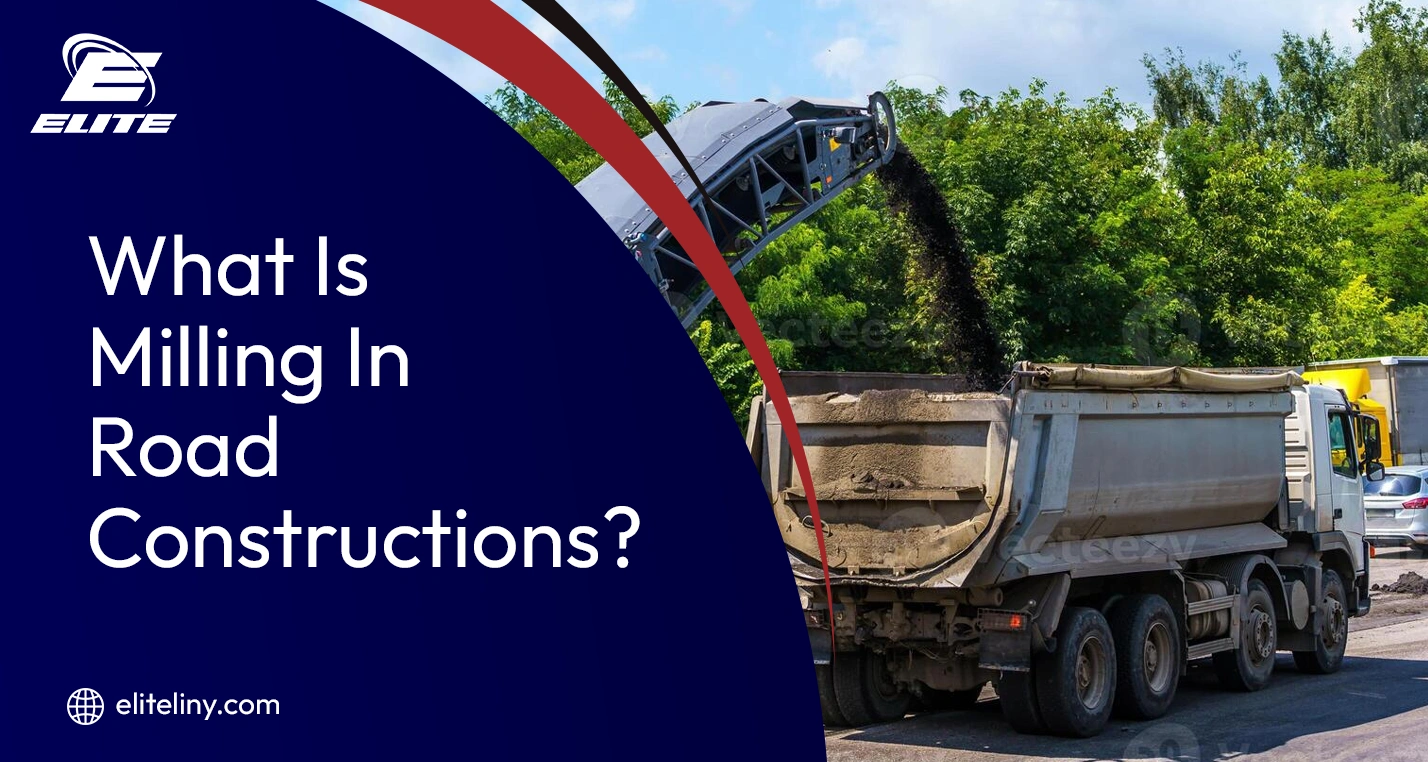
You’ve seen the big rigs grinding asphalt, tossing granules into a conveyor, and leaving a ribbed surface behind. That’s milling. But what is milling in road construction? It’s the controlled removal of a set depth of pavement using machines with rotating drums and carbide teeth. Crews remove the tired, cracked, or uneven layer without disturbing the sound structure beneath, then prepare for fresh asphalt.
Why does it matter? Because milling turns a rough, fatigued surface into a ready-made base, fast. Less waste, fewer full-depth tear-outs, and a smoother start for the overlay. It’s more than a repair; it’s an efficient way to reset ride quality and safety with minimal interruption.
Understanding How Milling Works in Road Construction
Milling may sound straightforward, but it’s a combination of engineering, precision, and skill. A milling machine, also called a cold planer, uses a rotating drum lined with carbide cutters to grind the surface of the pavement. As the machine moves, it removes the top layer of asphalt, which is collected and loaded into trucks for recycling.
Think precision, not brute force. A cold planer’s drum spins, teeth bite, and the surface lifts in controlled passes. The removed mix, RAP, or reclaimed asphalt pavement, rides a conveyor to trucks for recycling. Operators dial in depth, slope, and speed so the milled texture drains correctly and the new lift bonds well. One pass sets the grade; the next refines it. The result is a uniform, clean substrate that helps the overlay last.
Types of Milling Machines & Methods
Different problems, different cuts. Project goals, pavement condition, and traffic loads determine which approach is most suitable. Here’s how the common methods break down:
Partial-Depth Milling
Only the upper inch or two comes off. Use it when cracking, raveling, or rutting lives near the surface, but the base is sound. It’s quick, cost-effective, and keeps the structure intact so crews can place a thin or standard overlay with confidence.
Full-Depth Milling
Damage runs deeper? Go all the way through the asphalt layer, sometimes into the base. This clears severe rutting or widespread failures so builders can rebuild from a stable platform. It takes longer than a skim cut, but the payoff is a stronger, more durable section.
Fine Milling
Shallow cuts, tight tooth spacing, a premium on texture. Fine milling levels slight irregularities and delivers a smooth, uniform macrotexture that improves skid resistance and readies the surface for thin lifts or surface treatments. Think precision finish, not wholesale removal.
Shoulder Milling
Edges sink or heave over time, and drainage suffers. Shoulder milling re-establishes profile and elevation along the road margins so water sheds properly and the mainline pavement isn’t undercut by standing water. Small area, big impact on overall performance.
Benefits of Milling in Road Construction
Here’s why crews favor milling: it solves multiple problems at once and keeps projects moving.
- Cost Savings – Remove only what’s failed and recycle the rest; fewer materials, fewer haul-offs, smarter budgets.
- Improved Surface Quality – A uniform, level base helps the new asphalt compact better and ride smoother.
- Better Drainage – Restored grades and cross-slopes reduce ponding, which slows down deterioration.
- Environmental Sustainability – RAP goes back into new mixes, conserving aggregates and binder while cutting waste.
- Reduced Downtime – Milling is fast; roads reopen sooner, with fewer traffic headaches.
- Extended Pavement Life – Tackling surface issues early and laying a bonded overlay can add years before full reconstruction is needed.
In short, milling isn’t just about maintenance; it’s about optimization. It enhances performance, extends usability, and reduces the overall cost of road ownership.
Lifespan of Milling in Road Construction
Service life varies with depth, materials, climate, and loads, but these ranges are realistic for milled-and-overlaid roads:
- Light to moderate traffic roads: about 8–10 years before the next major resurfacing cycle.
- High-traffic urban roads or highways: typically 6–8 years due to constant loading and braking.
- Industrial or freight-heavy routes: roughly 4–6 years, depending on the quality of milling, truck volumes, and environmental exposure.
Absolutely, suitable maintenance, sealing of fissures, drainage repairs, and occasional inspection, can even go beyond the above-mentioned figures. Moreover, if milling is coupled with premium paving materials and skilled labor, then the life span of any road will be significantly increased.
Conclusion
Milling in road construction is a precise, sustainable way to remove worn asphalt and reset a pavement for success. By targeting only the layers that fail, milling preserves structure, improves safety and ride, and makes every overlay dollar work harder.
When done right, milling transforms damaged pavement into a ready foundation for the future. It saves money, time, and materials, all while supporting a greener, more efficient approach to road maintenance. Whether it’s partial, full-depth, fine, or shoulder milling, the process ensures that every mile of pavement lasts longer, performs better, and stays safer for everyone on the road. For more information about milling in road construction, you can check out Elite Parking Area Maintenance.