
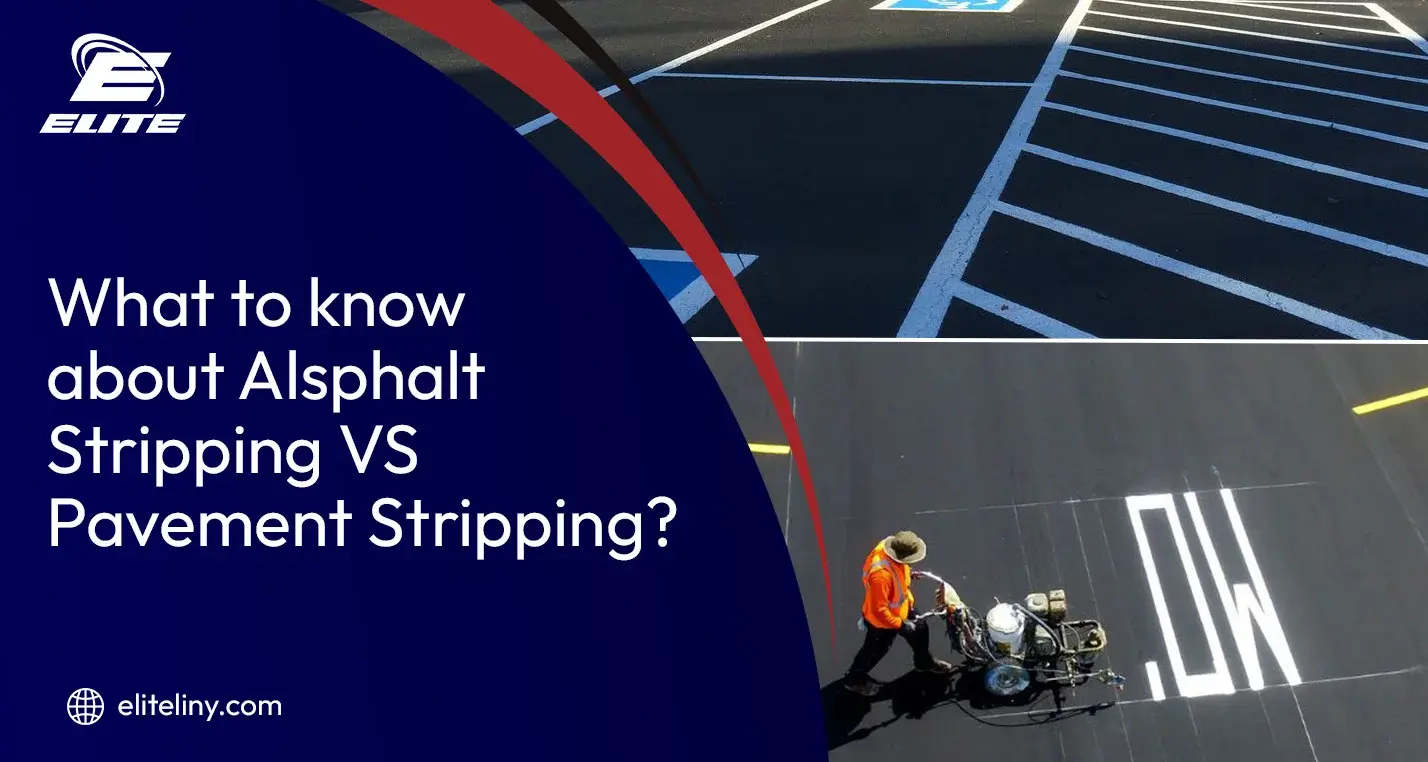
When you’re trying to keep a driveway, parking lot, or road in good shape, there are two completely different concepts: asphalt stripping and pavement striping. Asphalt stripping is a type of pavement distress where the binder loses grip on the stones underneath, weakening the pavement structure. Pavement striping is simply painting lines and symbols on the surface to help traffic move safely. Knowing the difference between asphalt stripping and pavement striping helps you fix problems the right way and keep people moving without slips, trips, or confusion.
What Is Asphalt Stripping?
Asphalt stripping is a pavement distress condition where the “glue” that holds asphalt and the stones (aggregate) together loses its grip. Over time, this weakens the pavement from the inside out. Stripping typically starts deep in the asphalt layer and only later shows up on the surface. When it does appear, it can look like cracking, chunks of asphalt missing, or surface deterioration. These signs are clues that the underlayer has lost its bond and the pavement is struggling structurally.
Common signs of asphalt stripping include:
- Visible cracking and fractures near wheel paths
- Raveling where loose stones come off the surface
- Small potholes or depressions
- Surface looking dull and rough underfoot
These symptoms aren’t minor scuffs. They’re the pavement telling you water and traffic are gradually weakening the asphalt bond that holds everything together.
Causes and Effects of Asphalt Stripping
Asphalt stripping doesn’t just appear out of thin air. Its causes are often specific and visible if you know what to look for.
- Moisture and Water Damage
Water is the main culprit. When it seeps into the pavement and sits there, it can push between the binder and the stones, breaking that crucial bond. This weakens the structure and lets other problems grow.
- Aggregate Surface Chemistry Issues
Some rocks may not bond effectively with the binder due to their chemical composition. If the stone prefers water over asphalt, the bond is already at a disadvantage.
- Inadequate Drainage and Moisture Retention
When pavement doesn’t shed water well, moisture stays trapped where it shouldn’t. That keeps pressure on weak bonds and speeds the stripping process.
- Environmental and Traffic Loading Stress
Repeated cycles of traffic loading and wetting/drying make any weak point worse. On a rain-soaked morning after heavy traffic the day before, you can almost see pavement start to break down.
- Structural Decline and Surface Distresses
Once stripping gets going, the pavement can start to rut (make grooves), shove sideways under load, or crack in patterns. Those surface problems are just the visible tip of deeper decay.
- Increased Maintenance Costs and Early Pavement Failure
Left unchecked, stripping doesn’t just look bad. It shortens the pavement’s life, forcing repairs or even full removal sooner than expected.
Methods Used for Asphalt Stripping
Fixing asphalt stripping isn’t one-size-fits-all. It depends on how deep and how widespread the problem is:
- Mechanical Removal Techniques
This includes milling or physically taking out the stripped sections and replacing them with fresh material. It’s like cutting away old, weak tissue to let strong structure take over.
- Chemical Methods
Anti-strip additives can be blended into new asphalt mixes to help the binder cling to aggregate, especially in wet climates. These improve adhesion and help future layers resist stripping.
- Thermal Methods
Sometimes heat can be used to rework and bond material more effectively, though this gets technical and isn’t used everywhere.
- Combining Various Methods
Often a combination is best for the removal of failed material, fixing drainage, and using improved mix designs. This gives the best long-term results.
What Is Pavement Striping?
Pavement striping is a surface-level treatment that helps people navigate the pavement safely. Instead of fixing structural problems, striping communicates where to go and what to do. It uses paint, thermoplastics, or other marking materials to outline lanes, parking spaces, crosswalks, arrows, and symbols. The goal isn’t strength, it’s clarity. Striping helps vehicles and pedestrians understand how to move safely and predictably in shared spaces.
Types of Pavement Markings
On any given road or lot, you’ll see a variety of markings that help organize movement:
- Line Striping: Solid or broken lines indicate lane boundaries, passing zones, or parking limits.
- Directional Arrows: Painted arrows that show turning or merging directions, including left, right, and straight arrows.
- Crosswalks and Pedestrian Symbols: Clear zones for people walking. It may include diagonal hatchings or school zone markings.
- Stop and Yield Lines: Bold lines indicating where vehicles must stop or give way. Typically located at intersections or pedestrian crossings.
- Special Symbols: Bicycle icons or handicap spaces.
- Parking Space Markings: Rectangles and stripes in lots, indicating designated parking spaces in lots.
Materials Used in Pavement Striping
Not all striping is just paint on asphalt. The material you choose affects durability and visibility:
- Traffic Paint
Quick to apply and affordable, traffic paint lays down lines that dry fast. It’s great for lighter traffic or frequent updates, but it wears down faster than heavier materials.
- Thermoplastic Markings
Heated and applied, thermoplastic provides excellent durability and reflectivity in heavy traffic areas.
- Polyurea and Epoxy Coatings
These two‑component systems form a strong, wear‑resistant surface. They’re often used where long life and high visibility are important.
- Reflective Additives
Tiny glass beads bounced into the marking, making lines pop when headlights hit them at night.
Key Differences Between Asphalt Stripping and Pavement Striping
| Aspect | Asphalt Stripping | Pavement Striping |
| Purpose | Signals structural pavement failure | Guides traffic and pedestrians |
| Process | Involves the repair or replacement of asphalt layers | Involves applying surface markings |
| Timing | Occurs as damage develops over time | Planned maintenance activity |
| Traffic Impact | Can cause closures and safety risks | Improves usability with minimal disruption |
Conclusion
To answer the question clearly: asphalt stripping is a pavement failure caused by loss of binder adhesion that eats away at your pavement’s strength, while pavement striping is a safety communication layer applied on top to direct drivers and pedestrians. Stripping signals you need repair, whereas striping keeps users safe and organized. Understanding this difference between asphalt stripping and pavement striping helps you make the right decisions when you look at a lot that’s cracking and lined. They may both affect the pavement’s look, but they sit on opposite ends of maintenance and safety needs.
Contact Elite Parking Area Maintenance to learn more about asphalt and pavement striping.