
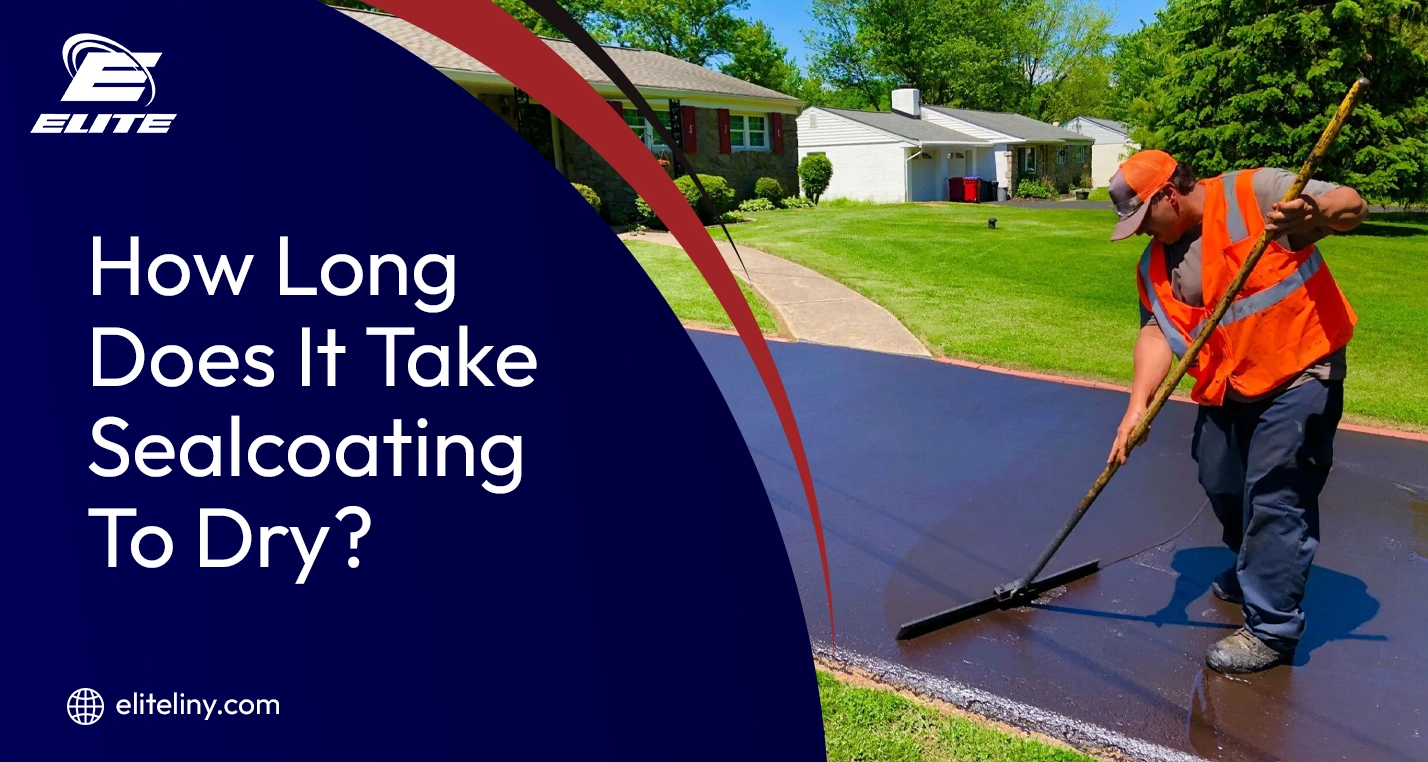
If you’ve ever had a driveway or parking lot freshly sealcoated, you know the wait can feel endless. You stand there, looking at the shiny black surface, and wonder, How long before I can use the sealcoating surface again? The real answer is that it depends. Sealcoating isn’t just a cosmetic upgrade. It’s a barrier, a protective coat that guards asphalt against cracking, oxidation, and everyday wear. But just like paint, it needs time to dry and cure properly before any wheels touch it.
Cutting corners here can backfire fast. A surface that hasn’t fully dried can smear, peel, or leave tire marks that never go away. Understanding how long it takes to dry and what influences that time helps you protect both your investment and the pavement underneath.
Average Time It Takes for Sealcoating to Dry
In general, sealcoating has a drying time of 24 to 48 hours before it can be used by vehicles. However, the drying time is influenced by various factors such as temperature, humidity, sunlight, and the type of product. Very often, the surface may feel dry sooner, but full curing provides the best protection, longest life, and smooth finish. Different sealers have different behaviors. Composition, application thickness, and environment are the three parts influencing the time frame. Here’s the classification by types.
Coal Tar Emulsion
Coal tar emulsions are the heavy-duty option for big lots and areas exposed to oil or chemicals. Under warm and dry conditions, they are completely dry on the surface in about 4–8 hours (which is okay for light foot traffic). For cars, it is better to allow at least 24 hours, occasionally even up to 48 hours if the humidity is high or there is little sun. Cool nights or cloudy days may prolong that period.
Asphalt Emulsion Sealcoating
Asphalt emulsion uses asphalt binders instead of coal tar, with less odor and fewer volatiles. It often needs a bit more time to cure fully. Expect 12–24 hours to walk on, and 24–48 hours before vehicle traffic in good conditions. The finish blends neatly with the existing pavement.
Acrylic Sealcoating
Acrylic or polymer-based sealers apply synthetic resins for a flexible and UV-resistant film. Their setting time is shorter, which is usually 2 to 4 hours to surface-dry; however, full curing still lasts for 24–36 hours, depending on coat thickness and airflow. It is an excellent choice if you need a quicker turnaround or cleaner emissions, but usually at a higher material cost.
Factors Affecting the Timeline of Sealcoating to Dry
Even with those average times, the actual drying schedule in real-world conditions depends heavily on external factors. Treat sealcoating as if it were a baking process, one and the same recipe, but in a different oven. These are the factors that most significantly alter the outcome.
Temperature
Air and pavement temperatures in the range of 60°F to 90°F are the best conditions for drying. Cold conditions cause evaporation to be very slow, whereas extreme heat can form a crust on the surface while the layer underneath remains soft. Therefore, air and surface temperatures should be checked at the same time.
Humidity
The drying process is prolonged by high humidity (70%+) since the moisture cannot leave at a fast rate. Applying right after a rain shower or in the early hours when the surfaces still retain moisture hinders proper curing, even if the area “looks” dry.
Wind
A light, steady breeze helps remove moisture and speeds curing. Strong wind adds dust and debris to the film. Aim for gentle airflow, roughly 3–10 mph, for even drying.
Sunlight
Direct sun speeds both drying and curing. Shade or overcast conditions can add hours, sometimes a full day, to the timeline, especially in cooler seasons.
Application Thickness
Thicker isn’t better. Heavy coats trap moisture, causing soft spots and extended dry time. Two thin coats, spaced properly, cure more evenly and faster than one thick pass.
Surface Preparation
Clean, dry, oil-free pavement bonds quicker. Residual dirt, detergents, or moisture in cracks slows or weakens curing. Pros wash, let the surface fully dry, and spot-treat oils before the first coat.
Traffic Load
Opening for feet is one thing; opening for cars is another. Pedestrian areas can resume sooner. Driveways and lots that see heavy vehicles need a longer cure time, hot tires, and turning loads can damage a soft film.
Conclusion
So, how long does sealcoating really take to dry? In many cases, plan 24 to 48 hours before driving on it confidently. Coal tar systems may cure more slowly but resist chemicals well. Asphalt emulsions are cleaner and versatile, with similar or slightly longer cure windows. Acrylics set faster on the surface, but still need solid conditions for full strength.
The perfect balance consists of a combination of factors: warm weather, low humidity, optimal prep, thin coats, and patience. Let the sealer cure completely, and as a result, you will be free of rework, scuffing, and early failure. Sealcoating is not only a cosmetic treatment but also serves as a shield. When properly done and dried, it makes your pavement look better for a longer time. For more details regarding and accurate information about sealcoating, you can check out Elite Parking Area Maintenance.