
When water hangs around on pavement, it does not take long for damage to show up. Cracks, dips, soft spots, they all start with poor drainage. Good systems move rainwater away before it has a chance to soak in. They protect the foundation, keep surfaces smooth, and save you from expensive repairs later.
Every paved surface needs drainage that fits its layout and load. Some systems clear water you can see; others handle what happens underneath. The best setups do both, moving surface runoff quickly while managing what’s hidden below.
What Is Road Drainage?
Road drainage is the system that directs water away from paved areas. It can be as visible as a trench drain along a curb or as hidden as a pipe running under the asphalt. Either way, it keeps moisture from breaking down the layers that support your pavement. Without it, water starts seeping into cracks, expanding with temperature changes, and loosening the base beneath the surface.
Proper design looks simple, but it’s built on experience. The slope, soil, and rainfall all decide how water should flow. When those details line up, you’ll see dry surfaces and solid pavement after every storm. When they don’t, you’ll see puddles, and eventually, damage. That’s where the right drainage setup makes all the difference.
Main Types of Drainage Systems
Let’s break down the main types of drainage that keep parking lots and access roads dry and strong year after year.
1. Surface Drainage Systems
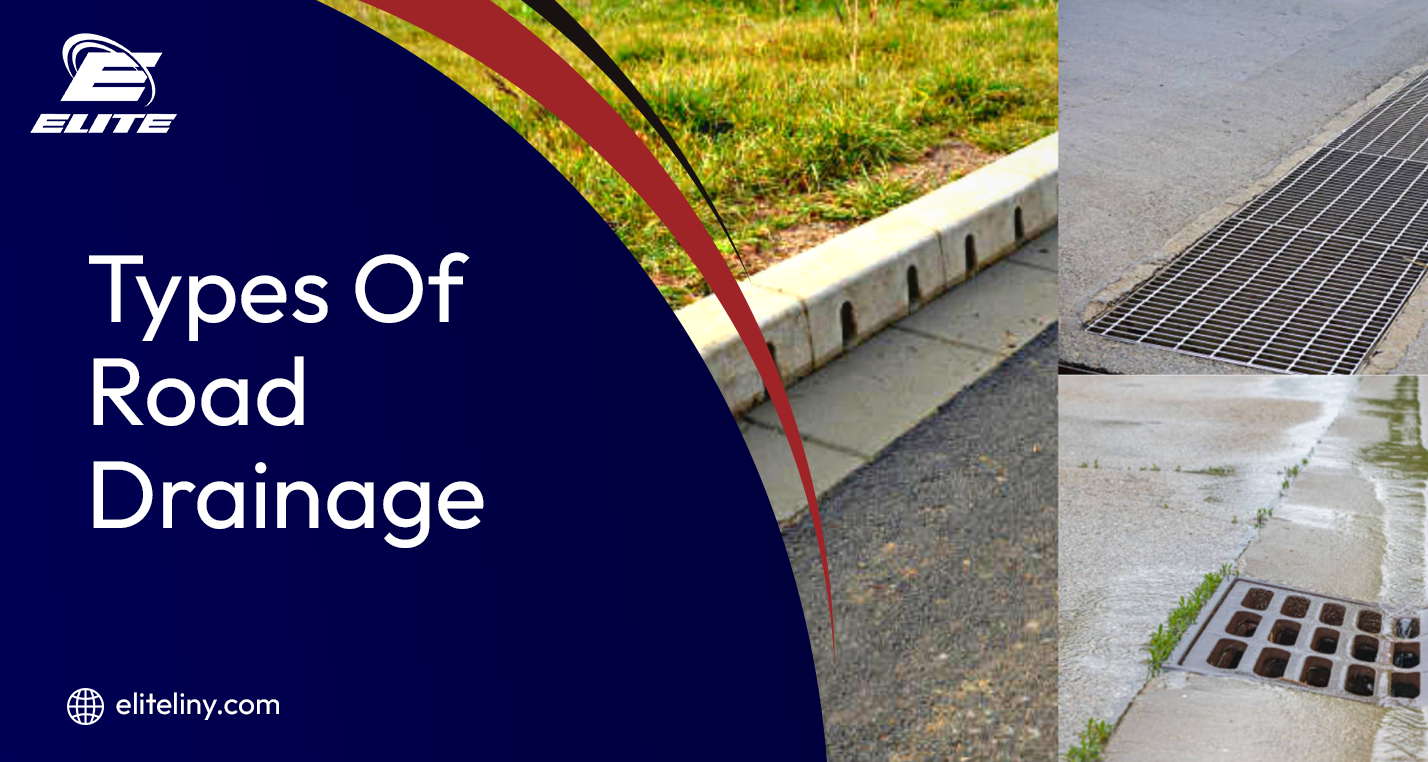
Surface drainage takes care of what’s visible, the water sitting or moving on top of the pavement. It’s the first defense against damage, guiding runoff away from traffic areas and into the right channels. These systems include catch basins, trench drains, gutters, and grading that pushes water toward low points.
When done right, surface drainage keeps your lot clear even during heavy rain. The pavement dries fast, which prevents standing water, slippery spots, and early cracking. When it’s ignored, the opposite happens. Puddles form, edges weaken, and small problems spread through the base. A simple correction in slope or a cleaned-out basin can bring that balance back and extend the life of your surface by years.
2. Subsurface Drainage Systems
What happens under the surface matters even more than what’s above it. Subsurface drainage handles the water that seeps through pavement or sits in the soil below. Over time, that hidden moisture can soften the ground and cause the pavement to shift or collapse.
To stop that, we use stormwater piping, underdrains, and buried channels that move trapped water away before it causes damage. These systems protect the structure from within, keeping the pavement stable even after long wet seasons. They’re especially useful for properties that see heavy traffic or lie in low-lying areas where water collects naturally. You don’t notice subsurface drainage when it’s working and that’s the whole point.
3. Stormwater Management Systems
Stormwater systems tie everything together. They collect, move, and release water safely so it doesn’t flood parking lots or nearby property. A proper setup combines basins, pipes, and outflow channels that redirect water during big storms.
Beyond function, stormwater systems also help meet local compliance rules by keeping runoff clean and controlled. They stop soil erosion, protect foundations, and prevent water from pooling near buildings or curbs. When designed correctly, you’ll see smooth flow even in a downpour. It’s the difference between a property that weathers storms easily and one that floods every season.
Other Key Drainage Features
A few smaller parts keep the whole system working like it should:
- Catch Basins: Placed at low points to capture surface water and funnel it underground. When clear, they move water fast and prevent overflow.
- Trench Drains: Long, narrow channels often installed near doorways, loading zones, or drive lanes. Perfect for flat areas that don’t drain easily.
- Piping Systems: Hidden under the pavement, these carry water away from the property and into the larger stormwater network.
- Site Grading: It sounds basic, but proper slope is what makes the rest work. Without it, no system drains well, no matter how advanced.
Together, these parts form a network that protects your pavement from damage and keeps your property safe through any season.
Conclusion
Drainage isn’t just part of construction. It’s the reason pavement lasts. Surface systems push water off fast, subsurface systems protect what’s underneath, and stormwater management keeps everything connected. When these work together, the pavement stays dry, stable, and strong year after year.
If you’ve noticed pooling water, washed-out edges, or cracks forming near drains, it’s a sign something’s off. A small fix now prevents a complete rebuild later. The right drainage setup protects more than your pavement; it protects your investment. And when you’re ready to get it right from the start, we at Elite Parking Area Maintenance can design and install a system that does exactly that, keeping your lot clear, safe, and built to last.