
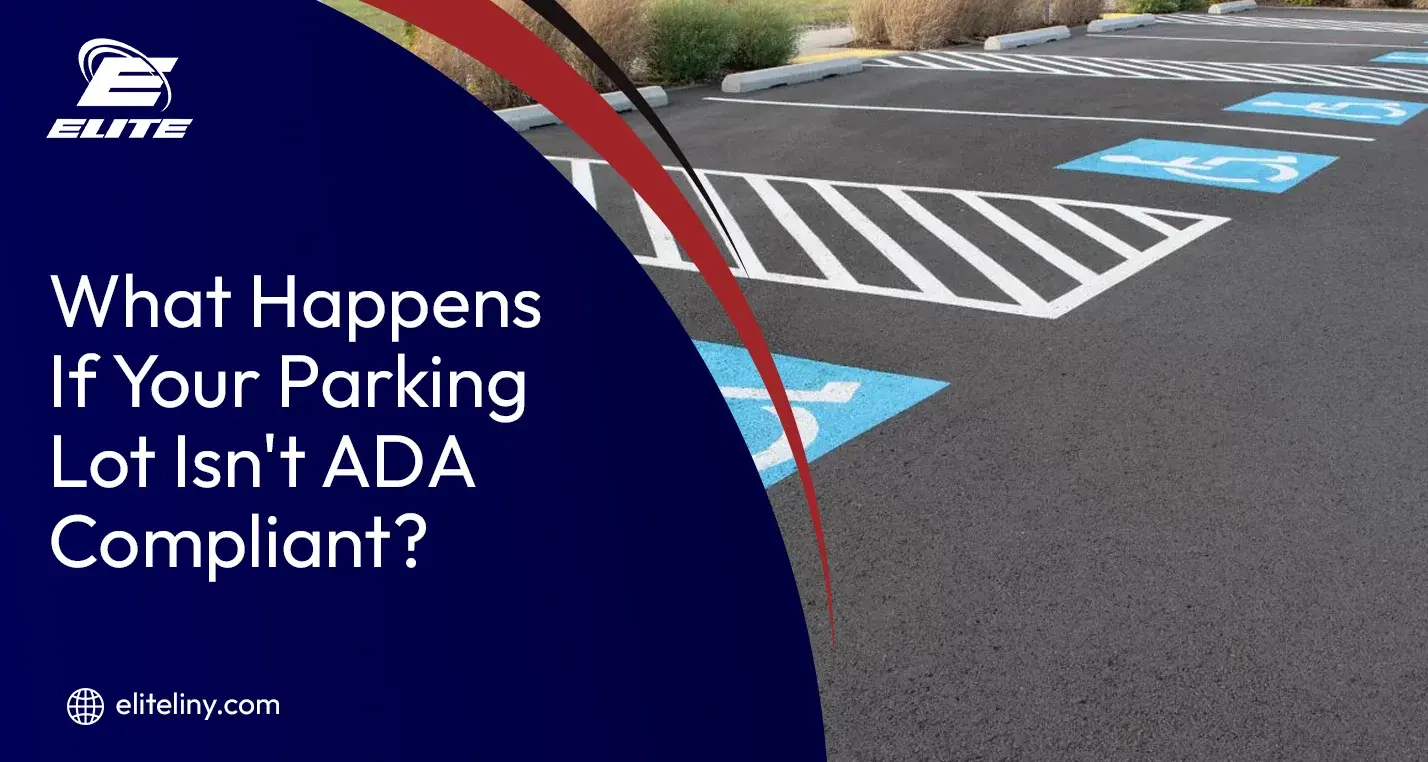
An ADA-noncompliant parking lot can create accessibility barriers and may lead to complaints, legal action, and costly repairs. Problems can include missing or improperly sized accessible spaces, blocked access aisles, damaged pavement, poor signage, and inaccessible routes to the building. Fixing these problems usually starts with a close inspection. Restriping spaces, repairing damaged pavement, replacing signs, and clearing accessible routes can correct many issues. More serious problems may need a professional accessibility review.
Key Takeaways
- Check ADA parking lot compliance if you are unsure about the layout. Space size, access aisles, signs, and routes all matter.
- Repair pavement quickly when cracks, potholes, or uneven areas affect an accessible space or route.
- Restripe worn spaces if markings no longer clearly identify accessible parking.
- Keep access aisles and routes clear every day. A blocked space cannot serve its intended purpose.
- Get a professional review when the parking layout or accessibility requirements are difficult to determine.
What Makes a Parking Lot ADA Compliant?
ADA parking involves more than adding a wheelchair symbol to the pavement. The whole route needs to be usable.
Accessible Parking Spaces
Accessible parking spaces must meet specific requirements for number, size, location, and layout. The number of spaces required depends on the total number of spaces in the parking facility. Van-accessible spaces have additional requirements.
Location matters too. An accessible space should connect to an accessible route leading toward an accessible entrance. Pavement condition matters as well. A designated space with a large pothole or badly broken surface may be difficult to use even if the striping is correct.
Access Aisles and Accessible Routes
Access aisles provide room for people to enter and leave vehicles. They need to stay clear. A vehicle parked across an aisle can make the adjacent accessible space difficult or impossible to use. The same thing can happen with trash containers, equipment, shopping carts, or other objects. The aisle should connect with an accessible route. That route needs to lead toward an accessible entrance without unnecessary barriers.
Required Signs and Markings
Accessible parking needs proper signs and pavement markings. Paint fades. Signs get damaged. Snow removal can scrape pavement markings away. A space that was clearly marked a few years ago may now be difficult to identify. Property owners should check the signs and markings during regular parking lot inspections.
Federal requirements apply to covered facilities. State and local rules may also add requirements. When there is uncertainty, the property owner should check the rules that apply to the specific property.
Accessible Routes From Parking to Building Entrances
People need a usable path after leaving the vehicle. That path should connect accessible parking with an accessible entrance. It should not be blocked by vehicles, equipment, construction materials, debris, or other obstacles.
Pavement condition matters here too. Deep cracks, potholes, broken curb areas, and uneven transitions can make the route difficult for people using wheelchairs, walkers, or other mobility devices.
What Can Happen If a Parking Lot Is Not ADA Compliant?
ADA problems can lead to complaints and legal disputes. Depending on the property and the circumstances, a person may file an accessibility complaint or take legal action. There can also be a direct repair bill.
A property owner might need new striping, replacement signs, pavement repairs, drainage work, or changes to an accessible route. If several problems are found at once, the work can become more expensive.
Ignoring the issue does not make it go away. A complaint may bring attention to problems that were already visible during routine maintenance. The exact consequences depend on the property, the violation, and the applicable federal, state, or local requirements. That is why owners should assess the actual condition of the parking area rather than assume that a few accessible spaces are enough.
What Parking Lot Problems Can Create ADA Compliance Issues?
Accessibility problems can come from the parking layout. They can also come from ordinary pavement deterioration.
Incorrect Number or Size of Accessible Spaces
A lot may have accessible spaces but still have layout problems. The required number depends on the size and type of parking facility. Van-accessible parking has additional requirements.
Size matters. A space that is too narrow can make it harder for someone to get in or out of a vehicle. Objects near the space can reduce usable room too. Restriping should be planned carefully. Repainting the existing layout without checking the current requirements can leave the same problem in place.
Missing or Improper Access Aisles
An access aisle needs to remain usable. Parking a vehicle partly inside the aisle is an obvious problem. Less obvious obstructions can cause trouble too. Dumpsters, carts, signs, landscaping, and maintenance equipment can all get in the way.
The markings should make the aisle easy to recognize. Property managers should also check whether people are regularly using the aisle for parking.
Faded or Missing Parking Signs and Markings
Parking markings take a beating. Sun, rain, snow, traffic, and plowing can wear down paint. Signs can become faded, bent, damaged, or hidden.
A worn accessible symbol may no longer clearly identify the space. Missing signage creates another issue. Repainting these areas should be part of regular parking lot upkeep. Waiting until every marking has disappeared usually creates more work than maintaining them along the way.
Slopes, Cracks, or Uneven Surfaces
Bad pavement can create an accessibility problem even when the parking layout looks correct. Large cracks can interfere with wheels. Potholes can make parking spaces harder to use. Uneven pavement can create difficult transitions.
Slope also matters. Accessible spaces and routes have specific requirements for slopes and surface conditions. Repairs need some care here. A poorly finished patch can leave a raised edge or depression that creates another obstacle.
Blocked or Inaccessible Routes
The route to the entrance needs attention after the parking spaces are installed. Vehicles may block a route. Construction materials may be left across it. Snow piles can also become an issue during winter. A route should be checked after maintenance work and major weather events. Keeping it clear is an ongoing responsibility.
How Can Property Owners Check ADA Compliance?
A basic inspection can uncover many problems before they become bigger repairs.
- Inspect accessible spaces and access aisles: Check the layout, surface, markings, and available space.
- Check signs and pavement markings: Look for faded paint, missing signs, and damaged posts.
- Review slopes and surface conditions: Pay attention to potholes, large cracks, broken pavement, and uneven transitions.
- Make sure accessible routes remain clear: Look for vehicles, equipment, debris, snow, and other obstacles.
- Address pavement damage that affects accessibility: Do not leave a pothole or broken section in an accessible space or route.
- Consider a professional accessibility inspection when requirements are unclear: A qualified inspection can help when the layout or applicable requirements are difficult to assess.
Do not limit inspections to the parking spaces themselves. Follow the route all the way to the building entrance.
How Can an Property Owner Fix ADA Parking Problems?
The fix depends on the problem. Some issues need basic maintenance. Others require changes to the parking layout or pavement.
Restriping Accessible Parking Spaces
Restriping can restore faded markings or correct a poorly planned layout. Before the lines are painted, check the number and placement of accessible spaces. Review the access aisles and route as well. Simply tracing old lines may preserve an outdated arrangement.
Repairing Damaged or Uneven Pavement
Potholes and broken pavement should be dealt with when they affect accessible parking or travel routes. Small defects may need a localized repair. Larger failures may require removing and replacing part of the pavement. The finished repair should leave a usable surface. A patch that creates a sharp edge or uneven transition can create another accessibility problem.
Correcting Signs and Access Aisles
Replace damaged or missing signs. Refresh pavement markings when they have become difficult to see. Then look at what happens around the space. A clearly painted access aisle does little good if drivers keep parking in it. Property managers may need better markings or signs to make the intended use clearer.
Improving Accessible Routes and Connections
Sometimes the parking space itself is fine. The problem may be farther along the route. A broken sidewalk, uneven curb area, blocked walkway, or poor connection to the entrance can prevent someone from reaching the building comfortably. The repair should address the actual barrier. Fixing the parking space alone will not solve a problem located on the route.
Planning Compliance Work With Other Parking Lot Repairs
ADA-related work can often be planned alongside regular parking maintenance. For example, a property preparing for resurfacing can review its accessible parking layout before the work starts. New striping can then be planned around the finished pavement.
The same applies to pavement repairs. If a damaged section contains an accessible space or route, addressing both issues during the same project may reduce repeat work.
Conclusion
ADA parking lot compliance depends on usable spaces, clear access aisles, visible signs, suitable pavement, and an accessible route to the building. A problem with any one of these areas can affect how the parking area functions. Property owners should inspect accessible spaces regularly and fix damaged pavement or worn markings promptly. Blocked routes also need attention throughout the year. When the layout is unclear or major changes are needed, a professional accessibility review can help identify the work required. For parking lot maintenance and repair, Elite Parking Area Maintenance can help property owners keep accessible areas in good condition.