
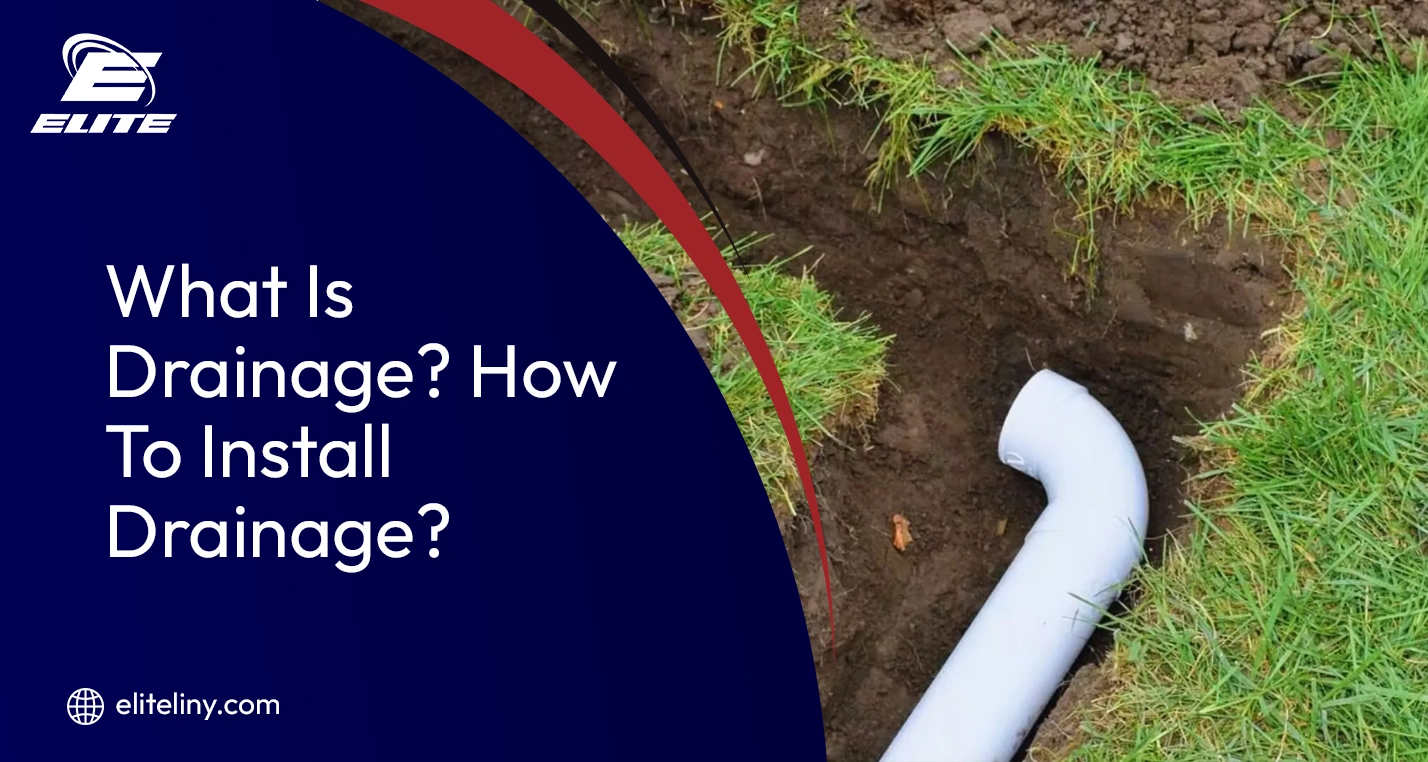
Drainage sounds simple until you watch water sit in the same spot after every storm and realize it’s not doing what it should. If you’re trying to understand what drainage is, it’s basically a system that moves water away from your home, driveway, or yard so it doesn’t pool, soak in, or start breaking things down. Some setups stay on the surface. Others run underground through gravel and perforated pipe. Installing it means digging a trench, giving the water a slope to follow, layering gravel, wrapping fabric, and building a clean exit path that actually works. Once you understand the idea, move water from Point A to a safer Point B, the entire process becomes way clearer.
What Is Drainage?
Drainage is the system that moves water off surfaces, out of soil, and away from structures. It can be shallow or underground, simple or engineered, but the purpose stays the same: prevent pooling, flooding, and long-term damage.
Most properties rely on a mix of these approaches:
- Surface drainage: This is what you can see. Sloped soil, small channels, downspout extensions, and shallow swales that help water glide away.
- Subsurface drainage: Hidden systems designed to pull water out of saturated ground. French drains, perforated pipes, gravel trenches, dry wells. These keep moisture from building below the surface.
- Grading: Maybe the most overlooked piece. The ground needs a natural slope that guides water away from the home. Even a gentle tilt makes a huge difference.
- Roof runoff management: Gutters and downspouts are part of drainage. If roof water drops straight onto the soil, it erodes the area, compresses the dirt, and encourages water to pool. Water always moves downhill. Drainage systems simply make sure “downhill” is the right direction.
Step-by-Step Instructions to Install Drainage
You can install certain drainage systems as a homeowner if you’re patient and the problem isn’t severe. Here’s a practical, realistic flow of how the process usually goes.
1. Watch the Water First
Before you dig anything, take a slow walk around your property during or after rain. Pay attention to where the water collects, how long it stays, and how it tries to move. Most people skip this part, which is ironic because it’s the most important.
You’re looking for things like:
- Puddles that hang around for a full day
- Muddy streaks that show the natural flow
- Water creeping toward the foundation
- Grass that stays wet long after the rest of the yard dries
This tells you where the real problem is, not just where it looks bad.
2. Choose the Right Drainage Method
Not every drainage issue deserves the same fix. Here are the common ones:
- French drain for soggy lawn areas
- Trench drain for driveways or walkways that flood
- Dry well when water needs a place to soak underground
- Downspout extensions for roof runoff
- Re-grading if the soil slants the wrong way
Matching the method to the problem is half the job.
3. Plan the Water’s Route
Every drain needs an inlet and an outlet. Where is the water starting? Where can it safely end up? That’s the puzzle.
When planning the route, keep an eye on:
- Slope (even a slight decline works)
- Tree roots
- Underground utilities
- Property lines (never direct water toward a neighbor)
Grab a garden hose and do a test run to see how water would behave along your planned path.
4. Start Digging the Trench
This is where things feel real. For most drains, you’ll dig a narrow trench deep enough for gravel and pipe. French drains typically go 18 to 24 inches deep.
While digging:
- Keep the decline consistent
- Remove rocks, roots, and soft soil
- Line the trench with landscape fabric so soil doesn’t clog the system later
This prep work decides whether your drain lasts a season or a decade.
5. Build the Drain
Now you start layering the materials:
- Add gravel to the bottom
- Lay the perforated pipe, holes facing downward
- Cover the pipe with more gravel
- Wrap the fabric around it
The fabric keeps everything clean. The gravel keeps everything draining. The pipe carries the water where you want it.
6. Cover and Restore the Surface
Once the pipe and gravel are in place, you can backfill with soil or sod. If it’s a driveway trench, use the correct compactable material so the surface stays even.
Most properly installed drains disappear visually once this step is complete.
7. Test the System
Run a hose into the start of the drain. Watch how water moves. Adjust any flat spots or clogs before the next big storm shows you what you missed.
8. Monitor the Area Over Time
Drainage isn’t a one-and-done job. After your next rainfall, check the area again. It should drain faster, dry quicker, and feel firmer underfoot. If not, the issue may be deeper than a DIY system can handle.
When to Call the Professionals
Some drainage issues look simple but aren’t. It’s smart to call a pro if:
- The yard slopes toward the foundation
- Water collects next to the house
- The soil stays saturated all week
- Tree roots complicate the route
- Erosion keeps returning
- Past drainage attempts didn’t help
- Water is entering the basement or crawl space
Professionals can measure grade, evaluate the soil, and design systems that handle heavier water loads than DIY installations.
Conclusion
Once you understand what drainage is, it becomes easier to see why the installation matters so much. Good drainage simply directs water where it can’t cause damage, whether that’s through grading the soil, installing a French drain, laying perforated pipe, or giving runoff a proper discharge point. The system only works when the slope, layout, and flow path are built correctly. And if digging trenches or designing water routes feels like guesswork, Elite Parking Area Maintenance can step in, assess the property, and build a drainage setup that actually lasts. When the system is installed right, it protects your home, your pavement, and your peace of mind every time it rains.