
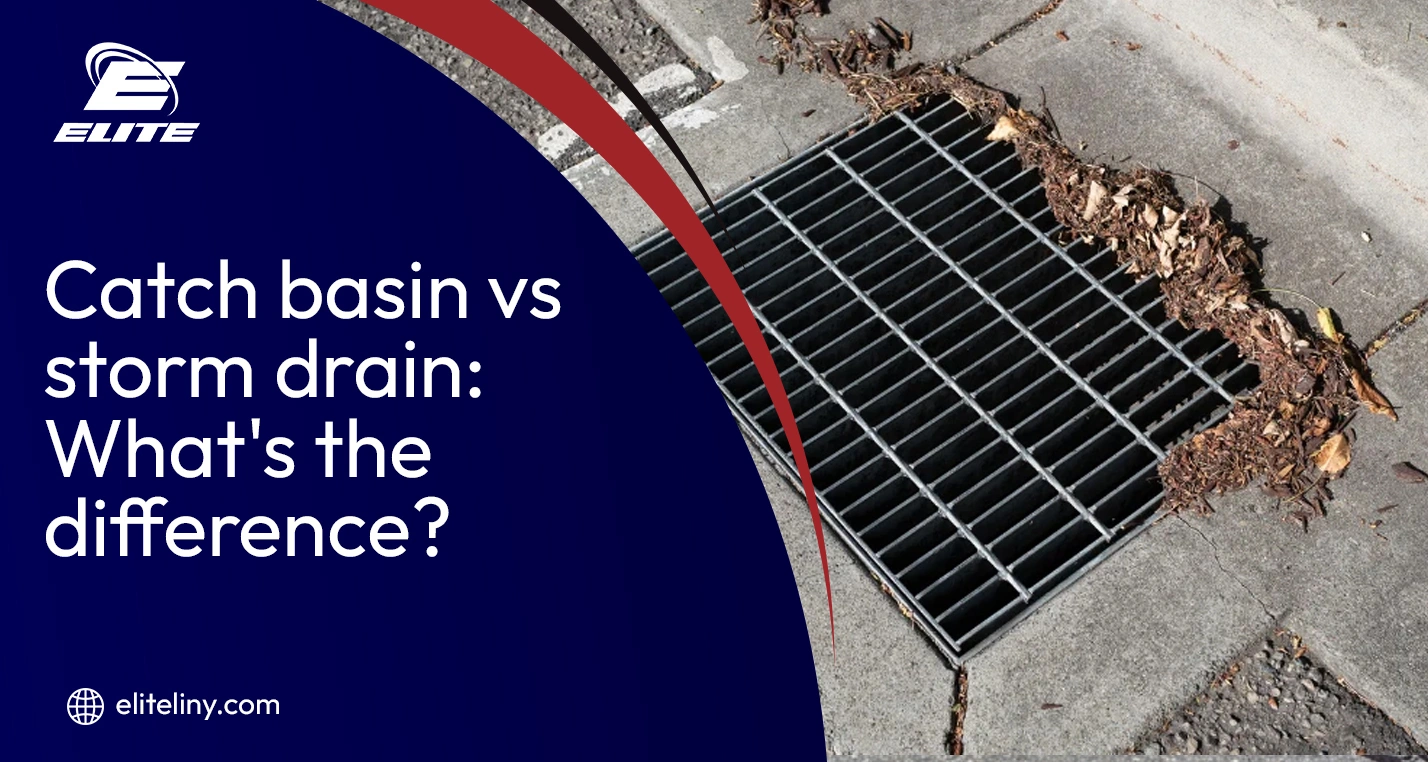
A storm drain and a catch basin are two different components of a storm drainage system. They do different things. There is a catch basin on the ground that collects surface water and filters out debris and such before it can continue. A storm drain is the pipe that takes the collected water underground. One catches and one moves. If you get confused about which one needs attention, you will end up fixing the wrong thing while the real problem gets worse.
Core Takeaways
- The difference between a catch basin vs storm drain is something that anyone who manages a parking lot or commercial property with recurring drainage problems should be aware of.
- At ground level, a catch basin is installed with a grate on top and a sump at the bottom to capture sediment and debris before water enters the pipe network.
- A storm drain is an underground pipe system that conveys water from catch basins to a discharge point. You don’t see it but it forms the backbone of the entire drainage system.
- Catch basins should be cleaned regularly. And when a catch basin is clogged, surface flooding will occur even if the storm drain beneath it is clear.
- Both work together. A well-maintained catch basin prevents the storm drain from clogging with debris and failing further down the line.
What Is a Catch Basin?
In the lowest spots in paved areas where water naturally collects, a concrete or plastic box is buried, which is essentially a catch basin. On top is a metal grate that lets in water and some debris but blocks anything large enough to cause trouble. At the bottom is a sump where sediment, silt and leaves settle as runoff pours into it.
When it rains, the water runs off the pavement, goes down through the grate and all the heavy stuff sinks to the bottom. Cleaner water flows out through a pipe that leads to the storm drain system. That sump down there has a filtering effect, so not all the debris goes clogging up pipes down the line. You’ll often see a few catch basins in parking lots, always at the low points, where water collects when it rains.
What Is a Storm Drain?
A storm drain is the underground pipe system that carries water from catch basins and other inlets to a discharge point. That outfall point is usually a retention pond, detention basin or city storm sewer depending on the location of the property and the local codes.
Storm drains don’t collect water directly from the surface. They receive water that has already passed through a catch basin or inlet structure. The pipes run under the pavement connecting multiple catch basins across the property and carrying everything out to where it can drain safely. In a parking lot you never see the storm drain but if it fails the whole drainage system backs up regardless of how well the catch basins are maintained.
Catch Basin vs Storm Drain: Key Differences
Here is how the two compare across the things that actually matter.
Design and Construction
A catch basin is a physical structure. A box with a grate on top and a sump below. A storm drain is a conveyance system. Pipes running underground from one point to another. They look different, work differently and need different maintenance approaches. Treating one like the other creates problems.
Function and Purpose
The catch basin intercepts surface runoff and traps solids at the point of entry. The storm drain moves water efficiently from collection points to wherever it discharges. One filters at the surface. One transports underground. Both need to work for the system to function properly.
Location and Placement
Catch basins are visible. You can see the grate set into the pavement surface at low points across the lot. Storm drains are invisible during normal conditions. They run underground and only become visible where they connect to catch basins or discharge at an outfall location.
Maintenance Requirements
Catch basins need the sump cleaned out regularly. When it fills up debris stops settling at the bottom and starts washing through the outlet pipe into the storm drain network. That’s when clogs start forming further down the line. The catch basin is always the maintenance priority because a clean catch basin protects everything downstream from it.
Common Problems With Each
Sediment, leaves and trash build up in catch basins over time and root intrusion happens more than people expect. When a catch basin gets blocked, water has nowhere to go and it backs up on the surface. Storm drains are a different story. They usually fail because a neglected catch basin let debris through and it builds up inside the pipes. Cracked joints and root intrusion cause problems, too but the starting point is almost always a catch basin that wasn’t being maintained. Both systems fail for different reasons and fixing one without addressing the other usually just moves the problem along rather than solving it.
Do You Need a Catch Basin or a Storm Drain?
Almost always both but which one needs attention depends on what the drainage problem actually is.
When a Catch Basin Is the Right Solution
Water pooling on a paved surface with no collection point nearby means a catch basin at the low point is the answer. Most parking lot flooding comes down to a missing, blocked or undersized catch basin rather than a failed storm drain. If water is getting in but not going anywhere, start with the catch basin before assuming the pipes are the problem.
When a Storm Drain Is the Right Solution
If water enters catch basins fine but drains away slowly or not at all the problem is in the storm drain. A blocked or undersized pipe can’t move the volume of water fast enough during heavy rain. Jetting the line or replacing a damaged section fixes the conveyance problem. Adding more catch basins won’t help when the pipe carrying the water away is the bottleneck.
When Both Are Used Together
Most commercial drainage installations use both. Catch basins collect and filter surface runoff at multiple points across the property and storm drain pipes connect them and carry water out to the discharge point. A well-designed system balances collection capacity with pipe capacity so neither side becomes a bottleneck during heavy rain. When one side of that balance fails the whole system underperforms and the surface flooding starts.
Conclusion
The catch basin vs storm drain difference comes down to what each one does. Catch basins collect and filter at the surface. Storm drains carry water away underground. Both need to be maintained and a failure in either one affects the whole system. If your parking lot or commercial property keeps flooding after rain despite having drainage in place the problem is usually in one of these two components. Elite Parking Area Maintenance provides catch basin cleaning, storm drain inspection and complete drainage system maintenance for commercial properties. Contact them and find out what is really causing the problem before it gets worse.
FAQs
Can you connect a catch basin to a storm drain?
Yes, and they almost always are. A catch basin’s outlet pipe at the bottom is connected directly to the storm drain network. The catch basin supplies filtered water to the pipes and the water is conveyed to the discharge point.
How often should a catch basin be cleaned?
Once a year works for most commercial properties. High traffic parking lots with heavy debris loads may need it twice a year. If the sump fills up between cleanings, the interval needs to get shorter. A full sump means debris is already moving through into the storm drain.
What happens when a catch basin gets blocked?
Water backs up on the surface and can’t drain during rain. Depending on how blocked it is the flooding can be minor or bad enough to damage vehicles, create slip hazards and push water toward nearby structures. A blocked catch basin needs cleaning as soon as the problem shows up not at the next scheduled service.