
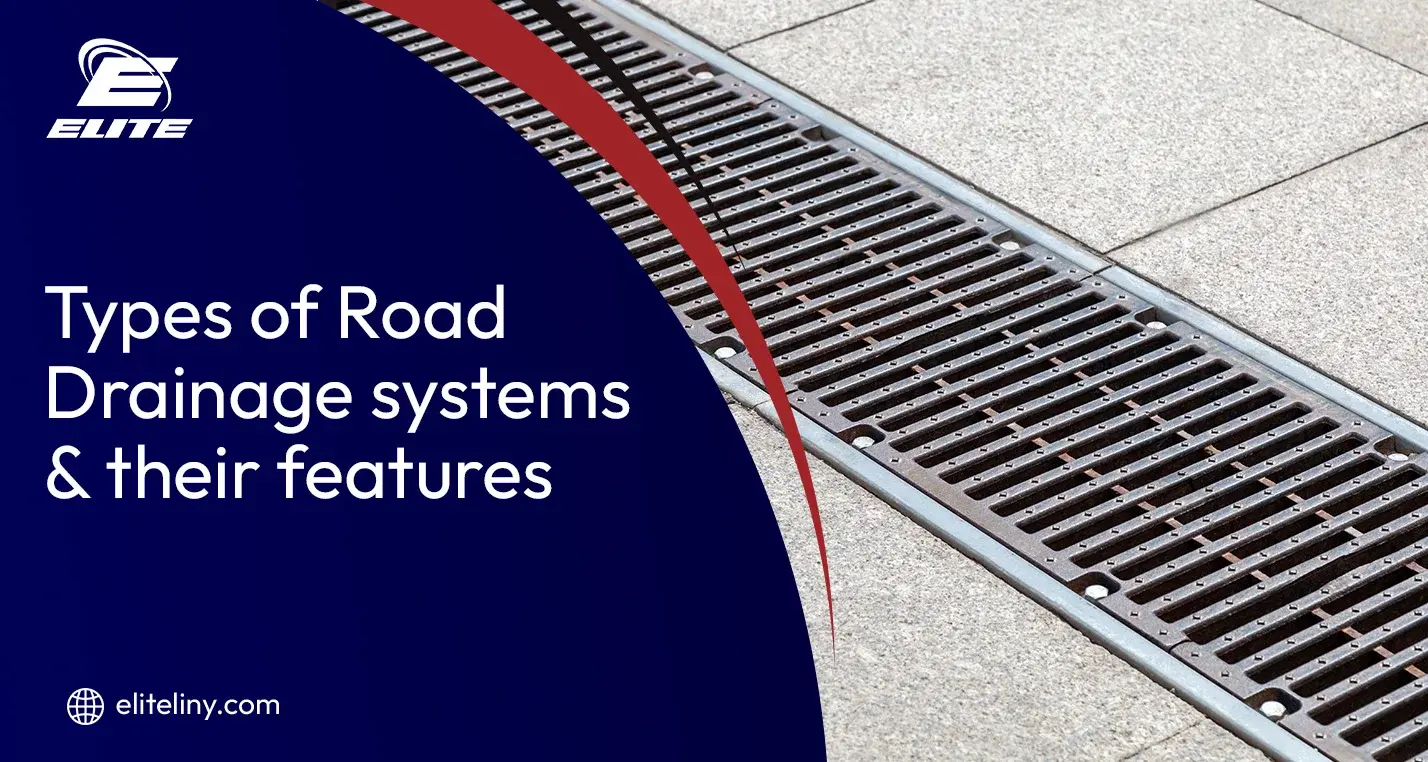
Roads are more than just asphalt. They carry people, towns, and cities along with them. And when it rains a lot, water can just sit there and start damaging the surface. That’s why drainage is so important. Good systems move water away quickly, keep the pavement strong, and help everyone get home safely. There are different types of drainage systems and their features available depending on the situation. Some roads use surface drains or subsurface drains. Others have longitudinal or cross drains. Side drains and gutter drains handle water at the edges, while French drains and slot drains work quietly under the surface or in hidden channels. Each one has a specific job.
Exploring the Types of Road Drainage Systems and Their Features
Surface Drainage
Surface drainage is the water you can actually see leaving the road. It’s the easiest type to understand. Water flows off the road and into ditches, gutters, or channels. Roads are built with a slight slope so water moves naturally. This stops puddles and accidents. And it keeps the road from getting weak. You see surface drainage a lot on highways and country roads. It’s cheap and very effective… if maintained.
Features of Surface Drainage
- Ditches and Gutters: Collect water from the road edges.
- Slopes and Camber: Push water toward the side.
- Open Channels: Small channels carry water away quickly.
- Grassed Swales: Slow water and filter dirt.
- Easy Cleaning: Just remove debris and it works again.
- Low Cost: No need for expensive pipes.
- Flood Prevention: Stops water from staying on the road.
Subsurface Drainage
Sometimes water goes under the road. Subsurface drainage handles that. Pipes or drains under the road collect water and take it away. This is important for roads built on soft soil because water can make them sink or crack. It also helps in cold areas by stopping frost from breaking the pavement. Subsurface drainage is not visible but it’s really important for road life.
Features of Subsurface Drainage
- Perforated Pipes: Take water away under the road.
- Gravel Layers: Filter water naturally.
- Soil Support: Keeps the base strong.
- Frost Protection: Stops ice damage in winter.
- Low Maintenance: Works for years once installed.
- Durable: Makes the road last longer.
- Flexible: Can be used under any road type.
Longitudinal Drainage
Longitudinal drainage runs along the road. It moves water from one end to the other. This is very common on highways and main roads. Without it, water would sit in low spots and damage the road. Side drains or channels usually do the job. If it rains heavily, water won’t flood the lanes.
Features of Longitudinal Drainage
- Side Drains: Along the edges to carry water.
- Concrete Channels: Direct water safely.
- Slope Needed: Works best if the road slopes slightly.
- Handles Heavy Rain: Stops flooding on highways.
- Easy to Clean: You can inspect and remove debris.
- Works with Other Systems: Surface or gutter drains.
- Road Safety: Keeps lanes dry.
Cross Drainage
Some water comes from across the road. Like small streams or slopes. Cross drainage handles that water. Without it, water could erode the road base or create potholes. Pipes or culverts are often used to let water pass safely under the road. Bridges also act as cross drains on larger rivers.
Features of Cross Drainage
- Culverts: Pipes under the road.
- Bridges: Let bigger water flows pass.
- Stops Erosion: Keeps soil from washing away.
- High Capacity: Can handle floods.
- Strong Materials: Made to last long.
- Fits Any Terrain: Works in hills or plains.
- Safe Roads: Reduces risk of damage during rain.
Side Drainage
Side drainage is similar to surface drainage but focuses on the road edges. It stops water from weakening the shoulders or flowing back under the road. It works well with ditches, gutters, or small trenches.
Features of Side Drainage
- Protects Shoulders: Stops water from washing the sides.
- Sediment Traps: Collect dirt before it blocks drains.
- Easy Cleaning: Accessible for maintenance.
- Grassed Options: Slows water naturally.
- Cost-Effective: Simple construction.
- Works with Other Systems: Surface or longitudinal drainage.
- Flood Control: Stops small pools forming near edges.
Gutter Drainage
Gutter drainage is everywhere in cities. It collects water from roads and sends it to the sewer system. They are usually made of concrete and can handle lots of rain. They are very important in urban areas where flooding can stop traffic.
Features of Gutter Drainage
- Concrete Channels: Strong and durable.
- Smooth Flow: Water moves easily along the street.
- Connects to Sewers: Water goes to treatment or storage.
- Handles Heavy Rain: Works in storms.
- Low Maintenance: Just clean every now and then.
- Safe Roads: Stops slippery surfaces.
- Looks Neat: Keeps city streets tidy.
French Drains
French drains are underground drains filled with gravel and pipes. They are good for clay soil or areas where water pools. Water seeps into the drain and is carried away slowly. They are not visible but very useful for long-lasting roads.
Features of French Drains
- Gravel Trenches: Filter water naturally.
- Perforated Pipes: Carry water away underground.
- Protects Foundation: Keeps road strong.
- Long-Lasting: Minimal maintenance.
- Cost-Friendly: Cheaper than big culverts.
- Works Anywhere: Urban, rural, or hilly areas.
- Durable: Prevents road repairs caused by water.
Slot and Trench Drains
Slot and trench drains are narrow surface channels. They collect water and send it to sewers or storage. They are common in city streets, parking lots and areas with heavy traffic.
Features of Slot and Trench Drains
- Narrow Channels: Efficiently collect water.
- Strong Covers: Vehicles can pass safely.
- High Flow: Works in heavy rains.
- Connects to Other Drains: Like gutters or pipes.
- Easy Access: For cleaning.
- Urban and Industrial Use: Streets, parking, factories.
- Safety: Reduces puddles and hydroplaning.
Conclusion
Understanding road drainage types and features may seem boring but it’s important. Without drainage, roads would flood, crack, or wash away. Surface ditches, underground pipes, French drains, gutters – all of these work together to keep water off the road and out of the way. Urban streets use gutters and slots. Highways rely on side drains and longitudinal drains. Every road type has a system suited for it. Next time it rains and you drive safely, remember these invisible systems doing all the hard work. Roads stay dry and safe because of them.
Contact Elite Parking Area Maintenance for expert road and parking lot drainage solutions.
FAQ Section
What are the features of a drainage system?
Good drainage prevents flooding, stops erosion, keeps roads durable, and protects drivers. They can be easy to maintain & adaptable. Proper design means water flows smoothly… without damaging the road.
What are the different types of drainage systems?
Broadly, drainage systems are surface and subsurface. Surface drains water on top. Subsurface handles water under the road. Some special types, like French or slot drains, are variations.
What are the different types of drainage on the road?
Surface, subsurface, longitudinal, cross, side, gutter, French, and slot/trench drains. Each has a special job depending on the road & weather.